A fluid medium where the past and future frequently intersect through a mysterious icon is presented in M.D. Dixon’s IKONA. The narrative follows four individuals who are drawn toward an ancient healing cross, leading them on a journey of inner reckoning and collective discovery. It is an observational look at how the choices of the few can resonate across multiple dimensions of existence.
Across various cities and fractured timelines, a mysterious Russian Orthodox cross with inexplicable healing power begins to emerge. Four strangers find themselves drawn into its resonance—from the busy streets of Sydney, Hong Kong, Atlanta, and Berlin to the stark quiet of a post-apocalyptic Siberian tundra. Kate Davies witnesses the icon’s power in Atlanta, while in Sydney, Finley Minor deals with the weight of prophetic visions. Jia Li MacPherson, a former thief, holds secrets that powerful forces are willing to kill for. One hundred years in the future, Wallace Deng Moroz, a monk in a world ravaged by a genetic engineering catastrophe, clings to visions of a cure.
In a dangerously polarized world, the convergence of these four heroes feels destined, yet it is ultimately shaped by their own decisions. As they move further into the cross’s field, they must decide which version of the future they will inhabit and what price they must pay to reach it.
Q&A
What’s a detail, theme, or clue in your book that most readers might miss on the first read—but you secretly hope someone notices?
I hope someone notices that whilst the present-day chapters and future chapters are chronologically ordered forward in time, the chapters set in the past (early 20th century Siberia) move backwards in time, so that the earliest chapter timeline-wise for the past chapters reaches a climax at the latest period time-wise for the other chapters. Truthfully, there are many other details that might be missed but which astute readers will catch: recurring motifs, the recursive nature of the story, how Gutov’s chapter 26 is also IKONA’s chapter 26, for example.
When did this story or idea “click” into place for you—was there a single moment you knew you had to write it?
This story first came to me in 2012. I planned the structure and journeys for years before I sat down to write it. I knew from the moment I got the first few pages and the title that it would be my most mature work. It is my fourth novel, but my first published novel. It was a persistent inner voice which never left me no matter how many twists and turns my life took in the interim. I wrote it in 2022.
Which character or real-life person surprised you the most while writing this book, and why?
Finley Minor’s journey evolved in a way I didn’t expect. No spoilers so I will just say that his arc deeply moved me, and I was unprepared for my own emotional reaction.
If your book had a soundtrack, what three songs would be on it and what scenes or moments would they pair with?
Jimi Hendrix’s All Along the Watchtower was a song that appeared in my mind the moment the title and first chapter appeared, as if guiding me with its revolutionary message – I feel that this song is the musical equivalent of IKONA’s message.
The song You Are a Memory by Message to Bears accompanied Part Three of the novel and always brings me back, emotionally, to Finley’s and Wallace’s final chapters.
Saeglopur by Sigur Ros takes me to the narrative’s climax and particularly Jia Li during one of her Shibari performances.
Music was a salve for the entire writing of IKONA and I created a public Spotify playlist for the novel called IKONA the Playlist.
What’s one belief, question, or emotional truth you hope readers carry with them long after they finish your book?
Hope. I want readers to experience hope and a sense of personal agency in the long road of societal change we currently find ourselves navigating.
Tell us about a moment during the writing process when the story (or message) took an unexpected turn.
Honestly, writing this felt like an experience of transmission. There was no unexpected turn – the consistency in message, tone and narrative arc was set and unwavering. There was always a sense of consistency, as if the river of words flowed, and I was merely the faithful witness. From a craft point of view, there was a fair bit of planning. It felt like a giant puzzle I had to arrange in precisely the correct order. Like sacred geometry. Which chapters went where, and in what order, and so on. But the narrative itself flowed without deviation.
If your protagonist (or the central figure in your nonfiction) could give the reader one piece of advice, what would it be?
Well, as my character Gutov says regarding his chapter the Bridge, “Read it again, this time with your heart.”
What real-world place, object, or memory helped shape a key element in your book?
I am a Russophile by training, albeit 30 years ago. I lived in St. Petersburg, did my doctoral research in Crimea, travelled a lot in Russia and Ukraine…
My experience speaking Russian with friends, speaking of the soul, of life, of destiny, on -35 degree nights in friends’ apartments, with vodka or strong coffee, has certainly shaped me, and by extension, my vision and prose. This was in the 1990s, a time of that society’s collapse – the atmosphere and weight of it permeates my marrow. So this definitely has shaped a certain ‘vibe’ of IKONA.
What’s something you had to research, learn, or experience to write this book that genuinely shocked you?
I can’t speak to shock; I don’t think anything shocked me! But I did a deep dive on the process of creating a metal crucifix –the how tos – and this led me to researching the life of iconographers in early 20th century Russia, and that was fascinating. I found a wonderful academic book on the subject matter with loads of photos, and it just really touched me. Iconographers were like monks, and lived as such and were part of the monastic community. I loved how when they created icons, it was a holy occasion accompanied by fasting and prayer.
SPOILER ALERT: I was surprised (and also not surprised as I know Russians and Russian history) that one of the chief investigators of the Tunguska Event was a famous (at the time) science fantasy author. The government actually invited this person to research and comment, because conventional science had found no answers, but they thought this author had some kind of insight into the field of reality beyond hard science. It always makes me chuckle when I remember this.
If your book were invited to join a shelf with three other titles, which ones would make you happiest—and what would that shelf say about your story?
I would place it alongside Cloud Atlas by David Mitchell, The Teachings of Don Juan by Carlos Castaneda, and The Overstory by Richard Powers. I think because it signals to the reader that while the story is a high-concept, multi-timeline puzzle, it is grounded in the visceral, feet-on-the-ground reality of a spiritual initiation. This shelf tells the reader that IKONA is an invitation to look beyond the shadows of our current reality and contemplate how consciousness itself can heal the future.
M.D. Dixon is a novelist, somatic therapist, and explorer of the intersections between the psyche and the sacred, science and mysticism, trauma and transformation. Holding a Ph.D. in the social sciences with a focus on Russia and Ukraine, Dixon has spent nearly fifteen years in therapeutic practice in Sydney, Australia. Dixon’s debut novel, IKONA, weaves visionary fiction, myth, and metaphysics to illuminate the evolution of consciousness. Dixon also hosts The Shattering Place, a podcast on multidimensional healing and the awakening human story, launching in early 2026.
Children often struggle to explain feelings that feel too big to name. In Katie’s Really Bad Day: A Story About Test Anxiety by Kathleen Jeffrey, illustrated by Susan Kilmartin, anxiety quietly interrupts learning and reveals the importance of gentle guidance and understanding.
Katie typically feels happy and confident, but tests cause her anxiety to spike. When a spelling test begins, physical sensations and racing thoughts make it impossible for her to focus. Her reaction draws attention and leaves her feeling embarrassed and uncertain.
Instead of punishment, the story centers on a compassionate response from Katie’s teacher. Through conversation and practice, Katie is introduced to calming strategies that help her regulate her breathing and slow her thoughts. As she begins to use these tools, she learns that anxiety before tests is common among students. The narrative highlights how understanding emotions and learning coping techniques can help children regain confidence and feel supported during stressful academic moments.
Q&A
What’s a detail, theme, or clue in your book that most readers might miss on the first read—but you secretly hope someone notices?
Empathetic, concerned faces of Katie’s teacher, Mom & Dad, and her classmates when Katie is upset. No one is making fun of her.
When did this story or idea “click” into place for you—was there a single moment you knew you had to write it?
During critique group sessions with a long manuscript, I discovered I actually had two books to write. The first became Katie’s Really Bad Day: A Story About Test Anxiety, to identify Katie’s character with school & test anxiety, which is based on my personal story I had to tell for authenticity. The second book will feature Katie once again and will be illustrated sometime this year.
Which character or real-life person surprised you the most while writing this book, and why?
Katie’s sidekick Finn turned out to be quite the entertaining cut up as well a very concerned and empathetic friend.
If your book had a soundtrack, what three songs would be on it and what scenes or moments would they pair with?
“Inside Out” by Michael Giacchino, (From joyful school yard to Katie’s sudden test anxiety.)
“When I Breathe” by Stephanie Leavell (Learning belly breathing with Miss Julie and later with the class.)
Overall story wrap up. Would play at the end of the book.
What’s one belief, question, or emotional truth you hope readers carry with them long after they finish your book?
That many students are anxious in school or before tests so you are not the only one. Because you are anxious before a test does not mean you are not smart or capable.
Tell us about a moment during the writing process when the story (or message) took an unexpected turn.
I was determined to have Mom take Katie into school the day she did not want to go because that was my personal experience. Through teacher critique partner advice and their experiences with children in today’s classrooms, I realized Katie would have to take the bus, work through it and tell Miss Julie what was going on.
If your protagonist (or the central figure in your nonfiction) could give the reader one piece of advice, what would it be?
Lots of kids get anxious before tests! Let your teacher and caregivers know when you are anxious. There are always solutions!
What real-world place, object, or memory helped shape a key element in your book?
My second grade elementary classroom and getting caught having scratched on my varnished desk was a deep rooted memory. A boy noticed it and yelled out to the teacher. She was very angry and scolded me in front of the class. I was so embarrassed I refused to go to school the next day so my mom had to bring me in and talk to the teacher.
What’s something you had to research, learn, or experience to write this book that genuinely shocked you?
Through my research on childhood, school and test anxiety, I learned test anxiety can start as early as second through fourth grade and may lead to underachievement. Between this research, writing my bio, interviewing my mom, older sister, adult neighbor and childhood classmates, I was able to make connections. The seeds of my overall school anxiety started with significant separation anxiety my first three weeks of kindergarten. By fourth grade my overall school anxiety did lead to test anxiety and eventually underachievement. Anxiety triggers fear and panic which makes it hard to concentrate when learning new concepts or taking notes while trying to keep up with the teacher or actually taking a test.
If your book were invited to join a shelf with three other titles, which ones would make you happiest—and what would that shelf say about your story?
Wilma Jean The Worry Machine by Julia Cooke (Classic, Funny, Popular)
The Big Feelings Book for Children: Mindfulness Moments to Manage Anger, Excitement, Anxiety, and Sadness by Sharon Selby MA (Respectable, Useful, Popular)
Alexander and the Terrible, Horrible, No Good, Very Bad Day by Judith Viorst & Ray Cruz Total Classic! (Happiest)
KATHLEEN JEFFREY is an author of children’s picture books, fulfilling her mission to create stories that shine with love, light, spirit, truth, and joy—helping children navigate life’s challenges, explore big emotions, and grow with courage, kindness, and wonder.
Rather than revisiting a familiar story as history, The Last Adam by Ron Echols treats prophecy as something active and unfolding. The story centers on individuals who find themselves drawn into a conflict that begins quietly and grows steadily more urgent.
Mary Levitt’s unexpected pregnancy draws attention she cannot escape—violent encounters, prophetic visions, and forces she cannot name begin to surround her. What seems impossible soon reveals intentional design.
At the same time, Joseph Riesman becomes involved in powerful political and financial structures tied to long-buried movements. Beneath public ambition lies something far older and far more dangerous than any human agenda.
The intervention of the archangel Raphael confirms that Mary’s child stands at the center of a war involving angels, fallen angels, and human collaborators who fear what this life represents. As betrayal deepens and manipulation escalates, Mary and Joseph must navigate spiritual warfare operating through both supernatural and worldly means.
Q&A
What sets your book apart from others in your genre?
The Last Adam doesn’t treat faith as an abstract. It treats it as a lived, psychological struggle. Most supernatural thrillers either lean heavily into spectacle or into theology. This story lives in the tension between doubt and belief, power and responsibility, heaven and human consequence. The divine is present but never comfortable. Angels don’t arrive to reassure; they arrive to disrupt. The story asks what faith costs when it stops being symbolic and becomes real.
What’s your favorite compliment you’ve received as a writer?
A reader told me they forgot they were reading a faith-adjacent story and just tore through it as a thriller. They said, “I came for the supernatural angle and stayed because I couldn’t stop turning pages.” That’s exactly what I hoped for.
Why did you choose this setting/topic?
I wanted to place an ancient, world-altering story inside a modern America. We live in a time of deep skepticism, fractured authority, and spiritual exhaustion. That felt like the most honest place to ask what would actually happen if something undeniably divine showed up again, not in a church, but in a society that doesn’t believe in that anymore.
Which author(s) most inspired you?
Frank Peretti for showing me that faith-based stories could carry real tension and darkness. C.S. Lewis for his moral clarity and spiritual imagination. And Stephen King for his understanding of fear, character, and how the supernatural feels when it collides with ordinary lives.
Which 3 books would you bring to a desert island?
The Bible, because it’s not just one book, it’s an entire library, and I’d never stop finding something new in it. The Count of Monte Cristo, because if I’m stranded, I want a story I can live inside for a long time. And a desert survival manual, because faith and literature are important, but I’d still like to get off the island.
RON ECHOLS is an ordained minister of the Gospel, an award-winning business executive, and a four-time Telly Award–winning producer. With The Last Adam: Resurrection Day, he makes his debut as a novelist, bringing a cinematic sensibility and spiritual depth to contemporary Christian fiction. A storyteller at heart, Echols blends suspense, gritty realism, and biblical prophecy to create modern retellings that explore enduring themes of faith, power, sacrifice, and redemption. Drawing from his background in ministry, media, and leadership, his writing places ancient truths into present-day settings where spiritual warfare unfolds alongside deeply human struggles. He lives in Texas, where he balances business ownership, community service, family, and writing stories designed to engage the imagination while stirring the soul. Visit Ron at his websiteand on TikTok.
Spanning more than thirty years, Assassins by Mike Bond traces an intelligence career shaped by evolving threats and unfinished consequences. The novel suggests that in covert warfare, no decision ever truly disappears.
Jack’s career as a CIA operative spans decades of covert conflict, where strategies evolve but consequences remain. Early involvement with local communities creates bonds that persist as political priorities shift and global threats emerge.
As intelligence operations intersect with terrorism and retaliation, Jack is drawn back into conflicts shaped by decisions made years earlier. Relationships, responsibility, and regret accumulate as each mission builds on the last. Assassins delivers a sweeping portrait of covert war, where no choice disappears and no one escapes unchanged.
Q&A
How did you research your book?
I don’t research my books, but write from my own memory of events.
Where do you get your ideas?
From my own past experiences, or from issues that concern me, like the danger of nuclear war. Or wars I have been in and I wish to expose how they happened, and who is responsible for all the deaths, sorrow, and destruction.
What helps you overcome writer’s block?
Never had it. Too many things to write about.
What’s your favorite compliment you’ve received as a writer?
Among many other critical praises, when BBC called me “The master of the existentialist thriller.”
Do you write every day? What’s your schedule?
I write when I want to.
Which author(s) most inspired you?
Hemingway – the greatest American writer of the 20th century. And Tolstoy, Gogol, Zola, Aristotle, Cicero, and many others.
What’s your go-to comfort food?
For writing — Gin or vodka.
If you could time-travel, where would you go?
Somewhere in our Paleolithic past, or among the Cheyenne or Sioux before the coming of Europeans.
What 3 books would you bring to a desert island?
If I were on a desert island I would be happy there and wouldn’t bother with books.
MIKE BOND is the author of nearly a dozen bestselling novels and an ecologist, war and human rights journalist, award-winning poet, and international energy expert. His work spans more than thirty countries across seven continents, often drawn from firsthand experiences in remote, dangerous, and war-torn regions. His novels are praised worldwide for their intricate plots, vivid settings, and explosive pacing. His reporting has covered wars, revolutions, terrorism, and major environmental crises. Learn more at his website.
In Fire Feud, Thomas Roehlk frames a modern legal crisis as the gateway to a much older conflict. The novel traces how routine professional decisions can unravel long-concealed histories with dangerous consequences.
The discovery of a skeleton during construction work in Chicago draws attorney Mandy Doucette into a situation that quickly spirals beyond standard legal management. DNA evidence reveals that the remains are tied to her own company and to her boyfriend’s family, placing Mandy at the center of a growing storm.
Her twin sister Reggie, an FBI forensic pathologist, follows forensic clues that trace the crime back to the aftermath of the Great Chicago Fire of 1871. Together, the sisters uncover a feud between two powerful families that has persisted for over a century. As they expose fraud, betrayal, and hidden crimes, they become targets themselves. The deeper they investigate, the clearer it becomes that certain men will resort to violence to protect their reputations and preserve the power built on buried truths.
Q&A
What sets your book apart from others in your genre?
I consider my genre as thriller, with the sub-genre of legal thriller. I have much respect for women in the corporate law world, and I believe my work shines a light on this type of character in the crowded world of thrillers.
What’s your favorite compliment you’ve received as a writer?
My favorite was from a review I received on my first book, Red Deuce. It was “Red Deuce shows the author’s behind-the-scenes understanding of how corporations work, making it seem all too credible. The plot keeps you guessing until the very end. Just when you think you’ve figured it all out, he throws another curveball that leaves you eagerly flipping pages to uncover the truth.”
Why did you choose this setting/topic?
Choosing Chicago as a setting provides an amazing city with amazing history, and therefore amazing opportunities to build stories. My protagonist is a study in contrasts. She finds herself unable to poke the beast until it reveals its web of intrigue and illegality, and the story of intermingled crime and espionage allows the protagonist to push herself into solving the mystery.
Which author(s) most inspired you?
Michael Connelley, John Sandford and Steig Larsson.
Which three books would you bring to a desert island?
Caleb Carr’s The Alienist, Steig Larsson’s Girl With The Dragon Tattoo, and Erik Larson’s Devil In The White City.
THOMAS M.ROEHLK is a retired corporate attorney from St. Charles, Illinois, whose career spans major international corporations in the defense sector, consumer products, transportation equipment, and financial services. He spent more than 20 years serving as general counsel and chief compliance officer for a public company, bringing deep real-world legal and corporate insight to his fiction. A graduate of the University of Wisconsin and John Marshall Law School, Roehlk also holds a Master in Management degree from Northwestern University. A devoted endurance athlete, he has completed more than 100 marathons and ultramarathons worldwide, as well as ten Ironman triathlons. After 46 years in the Chicago metropolitan area, he and his wife now split their time between Florida and New York. Visit Thomas at his website.
A full-cast audiobook musical told entirely through story and song.
Notorious jewel thief Jimmy Valentine (Hadley Fraser: “Phantom”, “City of Angels”) swears he’s going straight this time. But Jimmy has baggage that won’t fit in his suitcase of burglar’s tools. Soon after his release from prison, he’s back to his old habits.
Disillusioned New Orleans detective Jen Price (Kerry Ellis: “Wicked”) wants to catch Jimmy Valentine—and feel like a hero again. But Jimmy isn’t the villain she’d hoped he’d be. While hiding in a small town, Jimmy falls in love with Annabel Adams (Celinde Schoenmaker: “Guys and Dolls”). For the first time, Valentine dares to believe in a new life.
But is it too late?
Author Jeff Flaster’s reinvention of O. Henry’s classic short story combines world-class performances with a score that blends classical, jazz and classic rock into melodic storytelling that stays with listeners after the final note.
Cast album available on major music-streaming platforms.
Interview
What is the inspiration for Following Jimmy Valentine?
For years I tried to balance two identities — mathematical and musical — until a layoff from my day job made me decide I needed to “grow up,” set music aside, and build what I thought a stable adult life should look like. So I stopped writing music — for ten years. In 2017, when I finally felt ready to try again, I went to the Metropolitan Museum of Art looking for inspiration for a song—any song. That’s where I found Asher B. Durand’s The Beeches, a painting in which a shepherd walks from shadow into light — a perfect metaphor for emerging from my own creative dark ages into a personal renaissance.
Standing in front of it, a melody came to me, and I began writing a song then and there. That moment became the foundation for Following Jimmy Valentine. The painting still captures, for me, the feeling of stepping out of darkness and into possibility — the emotional journey at the heart of the story.
That same year, I reread O. Henry’s A Retrieved Reformation, whose theme of reinvention sparked a very different song — an early version of the song now called “Surrounded,” which tried to tell the entire story in three minutes. When my wife heard what I now refer to as the “Great Balls of Fire and Rain” version of “Surrounded,” she said, “You’ve got a whole musical there.” I thought about it and said, “Nah.” But she persisted, and she was right. I eventually reworked “Surrounded” to focus on the moment in the story when Jimmy Valentine falls in love.
Why a musical audiobook?
An audiobook musical is a musical stripped down to its two essential elements: story and song. Everyone can listen to it in their own way, for a fraction of the cost of a theatre ticket, and no travel necessary. From the side of the actors, no memorization, no blocking, no rehearsing—fit the recording dates into your touring schedule. And unlike live theatre, a book can last a thousand years.
What is your background to make this project happen?
Both my public persona and my secret identity contributed. Before I learned arithmetic, I was secretly writing music, in the privacy of my own mind. When I became a mild-mannered math major, I tried to keep math and music in separate compartments: calculus by day, singing at night. But my brain had its own ideas, noticing the aesthetics in the equations and the math in the melodies. From my “day job”–software engineering–I developed an approach to writing music that isn’t taught in any music school.
Jimmy Valentine’s change in occupations—from running from the law to running a shoe store—resonates with my own pivot in day-job careers, which took me from Boston to New York. In New York I found the cabaret scene, where I met an actuary who wrote songs at night, an Equity actress who worked in finance, and an HR professional who sang at Birdland—fifty years after her family had lived next to mine and taken my family in when our house burned down. Being around people whose identities were larger than their résumés helped me give Jimmy and Jen the freedom to be more than the roles life hands them.
And unconventional though it sounds, my corporate career proved invaluable when it came time to produce an audiobook musical with a team spread across eight time zones. Thanks to technology, our cast and creative partners were quite literally all over the map—from Seattle to London—which meant someone on the team was awake at any hour. Suddenly I was back in a world of milestones, meetings, communication threads, and above all, file integrity (“No, not the Wednesday version—the Thursday version”). My professional experience with technology became an unexpected asset, because the final expression of everything we built came down to a set of audio files I could carry in my pocket—a far cry from the basement-sized computers I once worked with, or the vinyl LPs I helped produce in 1985 that weighed almost as much as my piano.
You were able to bring great talent to be involved with Following Jimmy Valentine. What was that process like?
It was like reaching for the stars — and actually catching them. Kerry Ellis was the original West End Elphaba. Hadley Fraser played Raoul in the 2011 version of Phantom. Both these stories, like Following Jimmy Valentine, focus on characters who are not so much wicked as misunderstood. I selected my cast primarily based on their recorded music. In Kerry’s albums, I heard the soul of someone who’d seen her way through tough times. In Hadley’s Things that Come and Go, I heard his daring and versatility as he brought the Great American Songbook into the 21st century.
When I heard jazz legend Jacqui Dankworth sing the title track from Windmills, I heard the noir I needed for Collette. The first time I heard Jacqui sing in the studio, I felt as if I’d just fulfilled my life’s ambition. With David Hunter, I heard in his Time Traveller’s Wife album the willingness to take the desperate chance Jimmy’s Reflection would need to take when wooing Annabel, played by Celinde Schoenmaker, who won me over with her quack in “If I were a Bell”—a serious young woman coming unglued—temporarily—after her first drink.
The five above I selected primarily for their singing. For Jimmy’s buddy Emil, I needed a different skill set–a comic actor who could also sing. George Blagden made me laugh. I remember asking him in the studio to sing like a French Elvis, “Le Roi”, and he did. My ensemble actors Simon Shorten and Alison Arnopp amazed me in being able to both speak and sing in multiple voices to portray a variety of different characters. I can still hardly believe that all these people agreed to work with me. They must have seen something in the material, and in the efficiency, because with a couple of days work in a studio, they have a chance at creating art that lasts forever.
Why did you choose the music you did?
While looking at The Beeches in the Met, I came up with a fragment of melody.
In the first four notes, I heard a musical mirror — an F♯ in the middle with a G on either side, but in different octaves, like a reflection that isn’t quite symmetric. The notes for “war is over” develop the idea of an asymmetric mirror as well: the G sits closer to the repeated center than the D does on its opposite side. Soon after, I began writing the scene in which Jimmy talks to his Reflection and his Reflection talks back.
That asymmetric mirror became the seed of the entire score, because I realized that the central question isn’t who you are — it’s what you can be. As Jimmy’s Reflection sings, “What do you hear when you look in the mirror?” If the answer isn’t a satisfied yes, is it — as with Jimmy — because you want to rise to something better, or — as with Jen — because you fear you’re falling to something worse?
What themes run through your story and why those in particular?
The main theme is reinvention, because I’ve had to learn it myself. Both Jimmy and I have PTSD, and through years of work in therapy I’ve discovered that I can redefine who I am, especially in how I respond to things that once would have overwhelmed me. That idea — that we’re not cured, but we can change our patterns and rebuild our lives — is at the heart of both Jimmy’s journey and my own.
This leads to the second theme: our greatest battles are within. To quote Walt Kelly, “we has met the enemy, and they is us.” This means two things. First, you can root for both the cop and the robber. Second, although there is romance in the story, the primary drama is watching the characters decide what they’re going to be.
Because the primary conflict is internal, another theme is that external conflict can help clarify it. That matters to me because when I struggle internally, I sometimes want to retreat from other people — yet it’s often those interactions that bring my own patterns into focus. In the story, the same thing happens to Jimmy and Jen: although they seem to be out to destroy each other, their collision helps each of them heal by revealing the internal battles they’ve been avoiding. They don’t heal each other on purpose, but by forcing the truth to the surface.
You’ve updated characters from the O. Henry story. What or who inspired those changes?
Jen’s character draws deeply from my wife’s resilience — the kind of persistence that once led her to keep a newspaper clipping on her wall that read “I’m a fighter.” If there were one person I’d trust to stand her ground when everything is on the line, it would be her. That steadiness became central to Jen, who finds another gear and sings “I’m a fighter” at a moment when anyone else would have given up.
Collette was inspired by the real-life person for whom I named her: NYC cabaret legend Collette Black, who directed the 2018 stage reading of this musical, while, unbeknownst to the cast and me, dying from breast cancer. In the 2018 version, Annabel’s single parent was close to what O. Henry described: a “typical, plodding, country banker”. When I reinvented the character in 2024 and named her after Collette, I knew I needed to give her the indomitable drive I felt from the real Collette.
Jimmy’s relationship to his friend Emil is informed by my relationship to my brother Mike. One day in the 1990’s, Mike and his wife challenged my wife Helen and me to 2-on-2 basketball in our parents’ driveway. Mike probably figured he had an edge, since he played basketball and I really did not. But I “forgot” to tell him that Helen was on her varsity team in high school. Jimmy and Emil are always trying to get something over on each other — a dynamic I recognized immediately from my relationship with Mike.
Why should people want to buy and listen to Following Jimmy Valentine?
What other story pits a cop against a robber and has you rooting for both? Disillusioned Detective Jen Price wants a clean victory. Notorious jewel thief Jimmy Valentine wants an honest chance. Both are haunted by a memory they can’t make peace with. Each is trying to outrun a shadow only the other can illuminate. It’s the story of two wounded souls who can only heal by colliding. But the road to that collision is a dramedy, with laughs, charm, and warmth.
Jen feels trapped in a downward spiral by a regret she can’t apologize her way out of. Jimmy longs to fly into an upward spiral, but a wartime memory keeps pulling him back down. Neither is broken beyond repair, and neither finds a magic cure. What they discover instead is the first step toward healing, as their conflict forces each to confront the memory they’ve been running from.
The music mirrors their inner lives, using variations and reversals that make the listening experience feel both familiar and surprising. Its developing ideas of spirals and mirrors echo the characters’ hopes that broken patterns can be reshaped and fractured identities can be rebuilt. The story lingers because it’s not just about what happens — it’s about what becomes possible.
JEFF FLASTER is a New Yorker by birth whose parents were both mathematicians. They had saved since Flaster was born so that they could send him to MIT, and were not pleased when college-aged Flaster asked if he could major in music instead of math. So Flaster made music a minor, but it remained a major in his life. The fact that he is a tenor gave him easy entrée into choirs and ensembles, and he performed regularly in a group at MIT, The Chorallaries. He has also performed at The Kennedy Center with the Choral Arts Society of Washington, and at Tanglewood with the Tanglewood Festival Chorus.
Flaster produced three recordingsof his original compositions, available on Apple Music. Recently, inspired by O. Henry’s sunnier version of “Les Misérables,” Flaster wrote a full-length musical now called “Following Jimmy Valentine.” The 2021 version of this musical, called “Shell Shock,” was directed by Lennie Watts and can be seen on Melodic Music’s YouTube channel. Flaster’s interest in cabaret was sparked by his father, and by a course he took at 92Y with the late Collette Black. Find out more about him at https://www.melodic.com.
A high-class brothel that entertains New York’s most powerful men, the Double Standard Sporting House funds a free clinic for women. When the Tammany Hall criminal syndicate takes over the city in 1868 and starts kidnapping girls, the house’s owner Nell “Doc” Hastings cannot stay quiet—especially after sixteen-year-old Vivie arrives at the clinic bruised and bleeding.
Resolving to seek justice for Vivie and girls like her, Doc builds an unlikely alliance with religious reformers, a rare honest ward cop, and an alluring newspaper publisher she can’t seem to keep away from. Even with their help, Doc will have to use her sharpest tools—secrets, guile, and a surgical blade—to prevent a dark turn in the sex trade.
Full of intrigue, friendship, and love, this timely story of a heroine erased from history by the sexual double standard reminds us that women help and heal one another, even when shameless criminals come to power.
Interview
As a former history teacher and historical fiction writer, I always like to find out how a historical fiction/nonfiction author gets from an idea to the actual book. With that, my first question is, what inspired you to write The Double Standard Sporting House?
My delightful, flamboyant grandmother once told me that her Aunt Beadie was a madam. It was a total fabrication, but before I sorted that out, I wondered how a smart middle-class girl with a large, supportive family could end up in prostitution. The answers are: rape and seduction.
I began to imagine a smart girl, skilled in medicine, finding herself in the demimonde, and making the best of the options left to her. She builds an elite brothel to finance her free clinic. When it’s threatened by predatory men, she has a strong community to help her fight back.
How did you go about researching your subject?
About six months into the 2020 lockdown facing a Massachusetts winter at home, I dug into research. I spent about a year reading on the history of prostitution, the Tammany Hall political syndicate, and 19th century medicine.
Your main character is Nell “Doc” Hastings. How and why did she become your protagonist?
Doc is excluded from the practice of medicine because she’s a woman, and then punished for having greater skill than mediocre men. Exclusion followed by insult is a fair summary of being a woman in the 19th century, and sometimes now. Doc embodies traditional feminine strengths in caregiving, compassion, and community.
What in your background helps you in writing a historical fiction book?
I have a doctorate in American history, and have been reading and researching for decades.
A brothel would obviously bring about certain health concerns for women, especially during the 1800s. How did you come to link Nell’s brothel to her funding a free clinic for women? Also, what was the health care system like for women in the lower-income parts of society?
Cast out of ‘respectable’ society as damaged goods, Doc finds surprising freedom and autonomy in the demimonde. Prostitution was far more widespread in the 19th century than in the 21st. In 1868 New York when women had very few ways to earn money, 30% did sex work at some point in their lives, compared to 1-2% now. The only industry controlled by women, prostitution was also just about the only way for single women to accrue real wealth. Reduced to their sexual and reproductive functions, these women made the best of it. Owning the house allows Doc to run her clinic as she likes, serving the most vulnerable women without men telling her what to do. Ironically, she would have provided far better healthcare to prostitutes than respectable women received from fancy doctors.
Medicine in the 19th century was just beginning to professionalize. There were plenty of quacks with medical degrees, and plenty of skilled healers who’d never been to school. Women’s particular needs were little studied or prioritized, of course. Poor women would have had difficulty accessing care, and most likely would have seen midwives or traditional healers, especially in the country. Charity hospitals and free clinics served poor women in the cities, but often refused care to women they deemed morally undeserving.
How does society today resemble the time period and events in The Double Standard Sporting House?
Gangs of heedlessly corrupt, powerful men still prey on and abuse girls and women all the time, and cover it up, as we see in the news every day. Conservatives are torching women’s reproductive freedom, and endangering our health and our lives. They shame us for carrying the burden of childbearing, and punish us for demanding full agency and autonomy. Women have more rights now than they did 150 years ago, but fewer rights than we did a few years ago.
1 in 4 women in the US has been raped, and 50% have suffered active harassment. Misogyny is different but arguably as strong as it was in 1868.
It seems to me that historically, the achievement of power through corruption, or maybe even through honest methods, comes at the expense of women, at least historically. What are your thoughts?
Indeed. We live in a patriarchal society set up for the benefit of half the population, and our culture represents only half the experience of humanity, yet male dominance is so pervasive we often can’t see it. The hierarchical, competitive, acquisitive, individualistic drives associated with masculinity are anti-democratic, and are killing our planet. It leads men to treat women as less-than-human vessels for reproduction, and to demean and de-value everything associated with femininity, like empathy and compassion. Feminism does not seek to replace patriarchy with female domination, it seeks to promote democracy, equality, and an orientation to the common good.
Finally, why should people read The Double Standard Sporting House?
It’s a good story, one that may help readers to see prostitution, and women’s historical exclusion from most opportunities, in a new light.
Nancy Bernhard is a journalism historian and yoga teacher, fascinated by how survivors of sexual and political violence heal through storytelling and movement. Having earned a BA in religion at Dartmouth, a PhD in American History at the University of Pennsylvania, and taught at Harvard, Bernhard turned her indignation over the sexual double standard into an absorbing tale rooted in the 19th century history of Tammany Hall. She was born in Brooklyn, and lives with
her family in Somerville, Massachusetts. https://www.nancybernhard.com/
Betty Floyd’s uncle risked his life when he signed the Declaration of Independence, yet she is the epitome of British loyalty and social grace in 1779. Attempting to ignore the war, she attends New York’s balls and soirees with the Crown’s officers, but the city is a dangerous place for someone with Patriot ties. When a soldier she has befriended is murdered at a British prison, Betty is driven to choose sides and join General Washington’s covert spy group, the Culper Ring.
Her social calendar provides the perfect backdrop to dance with the enemy, and she catches the eye of the charming Major John André, Britain’s Director of Intelligence. Garnering timely information for the Patriots becomes a never-ending balancing act, amid heightened collision between duty to her country and deepening feelings for André. When the slightest misstep could expose her and the entire Ring, a traitorous plot conducted by Benedict Arnold unfolds, and Betty is led to the very brink of death. Will she outwit the enemy, or will her flirtations with danger cost her everything?
Interview
What in your background brings you to write historical fiction?
I’ve always enjoyed stories set in the past, and it’s so true how one wrong detail can throw off a reader and pull her out of the story. Sometimes I see it in dialogue, where the author will use a word or phrase that we understand now, yet wouldn’t have been used in the novel’s time period.
Well-written historical fiction has always drawn me in and taken me back in time. In turn, I love bringing a long-ago world alive to readers and making sure I do enough research to get it right and immerse them in the way things looked, sounded, and felt.
What brought Betty Floyd to be the focus of your second novel?
The idea for the novel began when I saw a list of important women in American history. One name stood out, or rather, a number—355. I wanted to know more, so I studied all I could find about George Washington’s Culper Spy Ring and 355, the elusive female spy, whose name remains unknown to this day. One book listed several possible candidates for 355, why each might have fit the bill, and also why not. One was Betty Floyd, and although there are few concrete facts about her, what we do know led me to consider the possibility of her involvement with the Culper Ring and write her story. The most intriguing, edge-of-your-seat historical fiction I’ve read in a long while. Wirgau’s authentic for the period writing, impeccable research, and great attention to historical detail brought daily life during the Revolutionary War and the Culper Spy Ring vividly to life. Through To Outwit Them All I walked the British occupied streets of New York City through a Patriot spy’s eyes, ever aware that one wrong move could be her last. Once begun, I could not put this book down. Brilliant. –Cathy Gohlke, Christy Hall of Fame author of This Promised Land
Obviously, according to your readers, you got the atmosphere right for the setting of New York during this time period. What was your research process?
In addition to books about the Revolution and the Culper Ring, I poured over maps of old New York and peppered historians with questions. I watched videos of 18 th century dances, studied colonial customs and manners, cooking techniques, and the purpose of ladies’ many clothing items. But the best research, and the most fun, was taking two Revolutionary War-centered tours in lower Manhattan, where I walked the same streets as the Culper Ring and visited some of the same locations they did. The tours were supplemented with excerpts from original newspaper articles and broadsides, giving a sense of what people were thinking and what they cared about.
How does being part of various writers organizations help with your writing?
I’ve been active in several organizations since I started writing, and I probably would not have stuck with it without them. I’ve learned so much through classes and writers conferences, and the friends and connections I’ve made through the years have been priceless.
You have a new book out but people always want to know what’s next. So, what’s
your next project look like?
My heart is drawn to unsung women in history. I’m doing more research into American Revolutionary women, but I haven’t fleshed out a definite idea yet.
What is your writing process like? Are you an outliner or do you start writing and see what happens with an idea of where you want to go?
First, I like to be inspired by a real woman from the past and see if there’s enough about her to build a story. I do a rough story arc, but for both of my novels, it took me a while to know where to start. I made loose outlines, jotting down a few phrases to keep me on track, and often stopped to consult my research before continuing. I’m not sure it was the most efficient process, but I wanted to keep the facts straight and it worked for me. I did several thorough edits as I layered in dialogue, descriptions, etc. In the future, I’d like to improve on my outlining.
What helped you make that final decision to become a published author?
I had been writing short stories and articles but hadn’t thought about writing a book until I stumbled on an amazing untold story of a twelve-year-old Titanic survivor. I knew it would make a good novel and I wanted to share it with others. It’s been very successful, and I wanted to write more and better novels. I think I’m like many historical fiction authors who have a strong desire to get a story out to the world that might otherwise be misunderstood or never known.
If you were on a deserted island and could have only books by one author, who would it be?
Books by Cathy Gohlke. Her novels are set in different time periods and locations, but they’re all about family, friendship, love, forgiveness, faith, and perseverance in the midst of great struggle. I could read them again and again.
A Michigan native, Peggy Wirgau now lives in Arvada, Colorado. She loves bringing history to life for readers, writing about real unsung women who faced extraordinary challenges and became heroes. Her debut novel, The Stars in April, is based on the true story of a twelve-year-old Titanic survivor.
Her second novel is set to release in October 2025. To Outwit Them All is based on the true story of the only female member of George Washington’s Culper Ring. Now available for pre-order!
Peggy has also written for Appleseeds, Insight, Learning Through History, and contributed to Why? Titanic Moments by Yvonne Lehman. Her blog features in-depth Titanic stories, and her followers include descendants of the ship’s real-life victims and survivors. See Blogfor more details.
A graduate of Michigan State University and George Mason University, Peggy is an active member of American Christian Fiction Writers, Historical Novel Society, and Colorado Authors League. She loves to travel and explore historical sites. She and her husband have two adult children and three grandchildren.
“Ambitious . . . themes of family, friendship, and personal integrity shine.” —Kirkus Reviews
“A highly engaging journey of connection and transformation and an innovative read for this present age.” —Rita Williams-Garcia, Newbery Honor author of One Crazy Summer
Welcome to The Vale, a world that grows by the power of imagination
A magical new phenomenon from the New York Times bestselling author and executive producer of the Loveboat, Taipei series (adapted to the Netflix film Love in Taipei).
Thirteen-year-old Bran Joseph Lee has spent half his life building the Vale, an immersive, AI-generated, virtual-reality environment using technology created by his inventor parents. It’s a lush fantasy world complete with a Blue Forest, a Castle, and adventures with his mushroom-obsessed Elf named Gnomly—a much better place to spend his days compared to his real life, where his parents have suffered through the failed launches of one invention after another.
Bran wants nothing more than to see his Elves come fully to life, a hope that seems on the brink of reality when he enters the Vale in a multi-million-dollar competition to fund its further development. But instead, things in the Vale begin to go wrong: The sunlight is fading. A beautiful girl appears from nowhere. A wizard is stealing from the Vale’s inhabitants. And the strangest part of all is that none of this is the young inventor’s doing.
Can Bran and Gnomly uncover the truth of what is happening before both their worlds are destroyed?
Look out for The Vale—Origins, the short film prequel to The Vale starring three-time Tony Award winner Lea Salonga, coming to film festivals and screenings near you!
“Exposes both the wonder of AI and its pitfalls, and the elastic boundary between. Storytelling at its best!”
—Kathi Appelt, National Book Award Finalist and Newbery Honor author of The Underneath
The Vale
THE REVIEW
At 13, Bran Joseph Lee is a computer coding whiz kid inventor of the AI generated game, The Vale, a game world of fantasy with castles and, of course as every 13 year old gamer needs, a mushroom loving elf named Gnomly.
Sounds good so far. It’s the good part of Bran’s life as the real world is much different. He and his family find themselves living in dire straits with little to eat and Bran, with The Vale, is their last hope as he enters the came into a competition.
Bran begins to notice The Vale is changing, and not by his design and he must find out why and save The Vale before it’s too late.
In addition to Gnomly, Bran comes across an evil wizard and a mysterious girl. You can imagine what happens to a boy who spends all of his time programming comes face to face with a girl in his virtual world. No, not that. But he does experience emotions and feelings in The Vale.
The book is not all about the game, it’s also about the real world of Bran. How the real life situations he’s in are handled, along with his time in the game as a back and forth kind of thing, but it’s well done and more connected than you might think, but then shouldn’t it be connected?
As I find with many books that need to establish a world, The Vale starts out a little slow, but then you find you’re moving along faster than you think.
I would let a middle school student and up read the book.
Abigail Hing Wen is a tech leader, filmmaker and the New York Times best selling author of Loveboat, Taipei and companion novels Loveboat Reunion and Loveboat Forever. She executive produced the Paramount+ book-to-film adaptation LOVE IN TAIPEI, a romantic comedy starring Ashley Liao and Ross Butler now out on Netflix August 9, 2024.
Her debut middle grade novel, The Vale, launches September 16. It’s short film prequel, The Vale — Origins, stars 3x Tony Award winner Lea Salonga and is Abigail’s directorial debut.
Her fourth young adult novel, Kisses, Codes and Conspiracies is an Amazon Editor’s Pick and Amazon Best Book of the Month.
Abigail holds a BA from Harvard, where she took coursework in film, ethnic studies and government. She also holds a JD from Columbia and MFA in writing from Vermont College of Fine Arts. In her career in tech, she has negotiated multibillion dollar deals on Wall Street and in Silicon Valley, worked in venture capital and hosted Intel’s Artificial Intelligence podcast. She and her work have been profiled in Entertainment Weekly, The Hollywood Reporter, NBC News, Forbes, Fortune, Cosmopolitan, Bloomberg, Google Talk, People en Espanol and the World Journal, among others.
Abigail lives with her husband in the San Francisco Bay Area. She enjoys long walks, and hanging out with friends and family. She loves music and dances to it when no one is watching.
The True Story of Captain Kidd: An American Hero and Antihero for the Ages By Samuel Marquis
There comes a time in every rightly-constructed boy’s life when he has a raging desire to go somewhere and dig for hidden treasure.
—Mark Twain
My ninth-great-grandfather Captain William Kidd stands today as not only perhaps the most famous piratical plunderer of all time but the swashbuckler most responsible for the buried-treasure mythology that continues to fascinate historians, writers of all stripes, pirate aficionados, treasure hunters, and the general public. I have heard the passed-down family tales of my treasure-chest-burying-scoundrel of an ancestor since I first learned to walk, and although many of them have proven to be complete balderdash, they have made a lifelong impression on me. As Mark Twain understood, hidden treasure is a powerful allure for a young lad —and for that we can thank the “trusty and well-beloved Captain Kidd,” as he was celebrated by King William III of England in 1695 before being transformed into the “most notorious arch-Pyrate ever to sail the seven seas” a mere three years later. As British pirate scholar Patrick Pringle has written, it is unlikely that Captain Kidd “will ever be displaced as the Great Pirate.”
However, despite his villainous reputation, how much of an “arch-Pyrate” was Captain Kidd really and how much of our enduring fascination with both the man and myth can be chocked up to our love of roguish outlaw legends, deeply entrenched American folklore, and the supernatural? The answer is more surprising than one would imagine.
ΨΨΨ
A quick historical sketch tells us that Captain Kidd (1654-1701) was an educated man who could read and write and trace his roots to a common but respectable Protestant Christian family from Soham Parish, Cambridgeshire, England. Having gone away to sea at an early age as an apprentice or cabin boy from the port town of Dundee, Scotland, he possessed ample nautical skills developed from the hard experience of a life at sea and thorough training in mathematics and navigation. He also had a little salty roguishness in him from spending two decades in the Americas from the mid-1670s through the 1680s sailing, fighting, and drinking with rowdy, violent, and vulgar buccaneers and merchant seamen. Whether he did in fact serve under the most famous buccaneer of all time, Sir Henry Morgan (1635–1688), remains unknown, but there is no doubt that William Kidd was a patriotic English privateer during his twenties and early thirties, sticking it to imperial Spain with the fate of the two bellicose empires hanging in the balance.
In his era, the early Age of Enlightenment (1685-1815) and middle Golden Age of Piracy (1650-1730), Kidd was a respectable privateer not a pirate, meaning his activities were sanctioned by the English government through a “letter of marque,” a license authorizing him to legally attack, capture, and plunder enemy ships in wartime. Yet, like many sea rovers in his day, his ultimate fate, as well as his perch in history, would depend on the not always clear distinction between legal privateer and outlaw pirate. Privateering as a seafaring profession for both patriotism and profit has existed at least as far back as the Roman Republic, and privateering ships and the privateersmen who manned them (both are referred to as “privateers”) served the function of an auxiliary, cost-free navy that were recruited, commissioned, and unleashed upon the enemy when the resources of combatant European nations were overextended.
While the Anglo-American, Dutch, and French buccaneers of the seventeenth century Caribbean were most certainly ruffianly and profligate, they were licensed privateers not renegade pirates, and Kidd lawfully plundered the Spanish on land and by sea in the Gulf of Mexico and West Indies to weaken Spain’s grip in the New World. The buccaneers’ lifestyle was built upon a modern-like, egalitarian political framework. Their homegrown system of direct democracy resulted in a unique brotherhood defined by honor, trust, integrity, and lending a helping hand to those in need. It played a huge role in nurturing Kidd’s core democratic value system and generosity. During his seafaring career, he went out of his way to help the unfortunate and he employed African Americans, Native Americans, East Indians, and Jews as share-earning stakeholders aboard his privateering ships-of-force, making him rather progressive and tolerant compared to the vast majority of his contemporaries.
In 1688, Kidd made New York his home port and bought valuable waterfront property in the city, and from July 1689 through April 1698 he fought as a licensed privateer in King William’s War against France (1689-1697), following William and Mary’s seizure of the English throne in the Glorious Revolution to ensure a Protestant succession. By May of 1691, he was a bona fide New York war hero, gentleman, and man of affairs married to the most dazzling socialite in town: the twice-widowed, twenty-year-old Sarah Bradley Cox Oort. With his “lovely and accomplished” wife Sarah, the wealthy New York privateer and merchant ship captain, jury foreman, and model citizen would have two daughters, Elizabeth and little Sarah, and in 1695 he was recruited by a group of wealthy London investors to lead an expedition to the Indian Ocean to battle the French and hunt down freebooters as King William III’s lawfully licensed privateer.
The plan was for Kidd to hunt down the Euro-American pirates of Madagascar, legally seize their ill-gotten riches, and keep them for not only himself and his privateering crew but for the king and lordly sponsors from the powerful Whig party that dominated the English government. Among Kidd’s wealthy London financial backers was Lord Bellomont, a powerful Whig House of Commons member and soon-to-be royal governor of New York, Massachusetts, and New Hampshire. Kidd was to capture the “predators of the seas” and their freshly plundered riches after they had raided the royal treasure fleets of the Great Mughal and other East Indian shipping between the Malabar Coast of India and Mocha and Jeddah in the Red Sea. Based on the New York privateer’s sterling reputation, the investment group not only issued “the trusty and well-beloved Captain Kidd” two special government licenses but built a 34-gun warship, the Adventure Galley, to his specifications.
Unfortunately for Kidd, his nearly three-year-long voyage turned out to be an epic disaster and turned him overnight into one of the most notorious criminals of all time. His great misfortune was that he had followed in the wake of the English pirate Henry Every, who had pillaged the Great Mughal’s fleet and encouraged the mass rape of the Muslim women aboard one of the plundered ships. A year into the expedition to the far side of the world shortly after Every’s debauchery, Kidd and his crew had still not encountered a single enemy French or pirate ship that could be seized as a legitimate prize and they had suffered one disaster after another, including raging storms, a tropical disease outbreak, severe thirst and starvation, and repeated attacks by the East India Company, Portuguese, and Moors (Muslim East Indians). Increasingly desperate to earn some money under their standard “no prey, no pay” privateering contract, a large number of his New York and New England seamen wanted to become full-fledged pirates themselves and plunder the ships of all nations to garner the prodigious riches of the East. However, the law-abiding Captain Kidd would not allow any violations of his two legal Crown commissions, one to fight the French and the other to hunt down pirates.
During the grueling voyage, Kidd accidentally killed his unruly gunner, William Moore, a man with two prison sentences to his name, by smacking him in the head with a wooden bucket while quelling a mutiny; and he lawfully seized two Moorish ships, the Rouparelle and Quedagh Merchant, that presented authentic French passports and carried gold, silver, silks, opium, and other riches of the East. However, while these wartime seizures were 100% lawful and he never once himself committed piracy in India, he soon thereafter looked the other way during the capture of a Portuguese merchant galliot that presented official papers of a nation friendly to England. His seamen sailing separately from his 34-gun Adventure Galley in the captured Rouparelle seized from the Portuguese vessel two small chests of opium, four small bales of silk, 60 to 70 bags of rice, and some butter, wax, and iron. Though a measly haul, the act technically constituted piracy even though Kidd wasn’t directly involved in the capture. He only allowed the seizure to pacify his mutinous crew, who had by this time divided into “pirate” and “non-pirate” factions aboard his three separate privateering ships; and in reprisal for the damage inflicted upon the Adventure Galley and severe injuries sustained by a dozen of his crewmen from two Portuguese men-of-war that had attacked him without provocation months earlier.
Despite the countless challenges he faced during his perilous voyage and a second full-scale mutiny because he refused to go all-in on piracy, Kidd miraculously made it back to the American colonies from Madagascar with around £40,000 ($14,000,000 today) of treasure in his hold and the French passports that proved he had taken the Rouparelle and Quedagh Merchant legally in accordance with his commission. However, when he and his small band of loyalists reached Antigua on April 2, 1699, they received heartbreaking news. The Crown, at the urging of the East India Company, had sent an alarm to the colonies in late November 1698 declaring them pirates and ordering an all-out manhunt to capture and bring them to justice. With the Englishman Henry Every and most of his plundering, gang-raping outlaws still at large, Captain Kidd was now Public Enemy #1 in the world.
He decided to try to present his case for his innocence and obtain a pardon from his lead sponsor in the voyage, Lord Bellomont, who had by this time taken office as the royal governor of New York, Massachusetts, and New Hampshire. After burying a portion of his legally obtained treasure on Gardiner’s Island in Long Island Sound and distributing a number of goods to several trusted community leaders and seafaring friends as a precautionary measure, Kidd sailed into Boston on July 3, 1699, to meet with Bellomont, who had promised him a full pardon. But with Kidd now a wanted criminal and Every still at large, Bellomont and the other London backers, members of the once powerful Whig Junto that had fallen from power to the spiteful Tories, wanted nothing to do with the scandal. Having merely lured his business partner into Boston by dangling the possibility of clemency before him, Bellomont treated Kidd with suspicion and arrested him and his loyal seamen shortly after their arrival to port.
After being stripped of all his lawfully seized plunder and enduring six months of incarceration in Boston, Kidd was shipped to England to stand trial. Abandoned by his wealthy Whig sponsors who had been supplanted by the revitalized Tories, he was found guilty and hung in public shame on May 23, 1701, where he proclaimed his innocence before a drunken, jeering mob of Londoners. Days later, his corpse was coated with tar and hoisted in a gibbeted iron cage downriver at Tilbury Point near the mouth of the Thames, where it would remain for the next twenty years to serve as the English State’s grisly warning to other would-be pirates of the fate that awaited them if they dared threaten England’s valuable trade relations with India by pursuing the short but merry life of a pillaging freebooter.
ΨΨΨ
The question of Captain Kidd’s guilt or innocence has been hotly debated by historians and the reading public ever since his gruesome public hanging. However, it is important to bear in mind that Captain Kidd was not a 100% innocent man. Even by the sketchy standards of the early Age of Enlightenment, he was guilty of at least one act of piracy during his Indian Ocean expedition, or at least of failure to lift a finger to prevent his crew from committing piracy in the taking of the Portuguese galliot; and, possibly but not definitively, one count of manslaughter in a fit of passionate rage against his mutinous gunner William Moore, who had two prison sentences to his name, one for striking his captain, before sailing with Kidd.
At the same time, although Kidd was not a fully innocent man by the legal standards of his age, he was most certainly no pirate like Henry Every, which is an ironic twist that many people find hard to reconcile for the man who has been called “the most famous pirate of all time.” As one historian has put it, “His innate respect for order, his sense of duty and mission, his past life as an honest, successful seaman, as faithful husband and loving father, and above all, his ambition for the future—all these factors precluded Kidd from ever becoming a true pirate. If he committed piracies, they were acts of expediency, even acts of survival.” Thus, the most famous “arch-Pyrate” of all time was no outlaw pirate in temperament, inclination, or practice. Contrary to our embellished tropes over the centuries with characters like Long John Silver, Captain Hook, Captain Blood, Captain Jack Sparrow, and rocker Keith Richard’s as Captain Teague, the father of Sparrow, Captain Kidd never forced anyone to walk the plank, swilled rum with treasure chests overflowing with gold, silver, and jewels at his feet, or roared catchy pirate phrases like “Arrgh!” or “Shiver me timbers!” or “Dead men tell no tales!”
The real Captain Kidd was simply a bold adventurer at the wrong place at the precisely the wrong time in the wake of the Henry Every debacle. But even more critical to his ultimate fate, he was backed by the worst kind of sponsors imaginable. Not only did the Machiavellian Lord Bellomont coerce him into leading a virtually impossible expedition to the Indian Ocean to hunt down pirates, by threatening to seize his crew and ship in 1695 when Kidd initially turned down the command of the voyage, he and his fellow Whig noblemen dropped him as soon as he became a potential liability. Though these unspeakably powerful leaders gave the pirate-hunter firm, up-front assurances that they would stand by him in his difficult mission, they threw him overboard like ballast at the first whisper of trouble to protect their lordly reputations.
Unlike the largely unknown real pirate Henry Every, Captain Kidd’s story has been told and retold in thousands of accounts, from the heavily biased broadsheet newspapers and ballads of his day, to the countless books and journal articles produced over the past five centuries, to the Hollywood swashbuckler films of the silver screen during the past century. And yet, the tale of this humble-born New York privateer—who rose up by his own bootstraps to become the “trusty and well-beloved Captain William Kidd” of the King of England himself—has been lost to us in a foggy haze of legend, myth, and propaganda for the past four centuries.
“When the legend becomes fact, print the legend,” proclaimed fictional reporter Maxwell Scott in the classic 1962 Western film The Man Who Shot Liberty Valance, directed by John Ford. But when it comes to my ancestor Captain Kidd, such an approach cannot suffice. For the simple truth is there was an actual flesh-and-blood Captain Kidd, and the story of that Kidd, my real ninth-great-grandfather, is far more fascinating, nuanced, action-packed, and ultimately tragic than the caricature of mythology and pop culture.
Few historical figures have cropped up at so many important turning points on the global stage, come into contact with so many historically noteworthy individuals in such a short period of time, have seemed to be everywhere at once, had more lies spread about them in their own lifetime, or cast such a long shadow for five consecutive centuries and counting. Case in point: Kidd’s trial was the greatest courtroom drama of the eighteenth century, and one of the biggest political scandals in British-American history, rocking the New World and the Old and threatening “to tip the subcontinent of India to the Maharajahs.” But it was nothing but a sham proceeding to make sure Captain Kidd hung for the crimes of Henry Every and the other real Red Sea pirates of the 1690s.
But once we peel away the onion layers of mythology and propaganda to uncover and illuminate the real Captain Kidd, as judged by the moral standards of his era, we realize that he was a good, honest, and courageous man given an impossible mission and sponsored by dirty, rotten scoundrels who threw him to the wolves. Thus, at the end of the day, the supreme irony at the heart of Captain Kidd saga is that the man widely considered “the greatest pirate of all time” was no pirate at all. Behind the Kidd myth was a real man: a son, a husband, a father woven into the tapestry of early America, rendering him for all the ages a unique yet flawed colonial American hero (or perhaps better anti-hero), whose life story by a simple twist of fate happened to be fascinating, exciting, bizarre, and heart-rending enough that Washington Irving, Edgar Allan Poe, Nathaniel Hawthorne, and Robert Louis Stevenson have all made him immortal in their most celebrated works.
It is for this reason that the legendary Captain Kidd has had the last laugh on us all.
Captain Kidd: A True Story of Treasure and Betrayal
Samuel Marquis
About Sam:
The ninth-great-grandson of legendary privateer Captain William Kidd, Samuel Marquis, M.S., P.G., is a professional hydrogeologist, expert witness, and bestselling, award-winning author of twelve American non-fiction-history, historical-fiction, and suspense books, covering primarily the period from colonial America through WWII. His American history and historical fiction books have been #1 Denver Post bestsellers and received multiple national book awards in both fiction and non-fiction categories (Kirkus Reviews and Foreword Reviews Book of the Year, American Book Fest and USA Best Book, Readers’ Favorite, Beverly Hills, Independent Publisher, Colorado Book Awards, and others). His historical titles have garnered glowing reviews from bestselling authors, colonial American history and maritime historians, U.S. military veterans, Kirkus Reviews, and Foreword Reviews (5 Stars).
You can get Captain Kidd: A True Story of Treasure and Betrayal at Amazon.
Publishing a book is a creative triumph—but making it visible on Amazon requires structure, planning, and a deep understanding of the platform’s inner workings.
The Amazon Author Formula Workbookby Penny Sansevieri is a strategic, hands-on resource created for authors who are ready to shift from uncertainty to action. This workbook offers a clear, customizable roadmap for improving discoverability, sales, and reader engagement across every stage of the Amazon experience. With over a dozen worksheets and guided exercises—covering everything from metadata and pricing to Amazon Ads and launch timelines—it encourages authors to move beyond surface-level fixes and engage with what’s really holding their book back. Every tool is backed by years of field-tested strategies and includes a downloadable version for easy printing. Whether you’re launching your first title or course-correcting a backlist, this workbook helps you take measurable steps toward long-term success on Amazon.
Amazon Author Formula WorkbookThe Amazon Author Formula
&
What inspired you to create a workbook version of The Amazon Author Formula?
I’ve worked or consulted with thousands of authors over the years, and I know that learning is one thing — applying it is another. The workbook was born out of a desire to bridge that gap. It’s designed to guide authors through hands-on exercises — refining keywords, polishing descriptions, rethinking pricing — with space to brainstorm, track, and implement. Think of it as a strategic playbook that turns learning into lasting results. And it absolutely plays off of The Amazon Author Formula, so using the two side by side works extremely well.
Title Brainstorming
What’s one of the biggest mistakes authors make on Amazon?
They ignore their retail page. Authors focus on ads or social media without realizing that every campaign leads back to that Amazon page. If it’s not converting — if your keywords are off, your description is vague, your book cover is lackluster, or your categories are wrong — no amount of traffic will help. That’s why so much of the workbook focuses on refining that page. Every tweak improves your relevancy and increases your chances of showing up in searches.
Category and Sales Rank
Can the workbook help if my book has already been published?
Absolutely. In fact, most of the authors using the workbook already have books out. The beauty of Amazon’s system is that it’s fluid — you can update keywords, adjust pricing, optimize your book description, and test new ads. The workbook helps you evaluate what’s working and make strategic changes that keep your book competitive.
How is this workbook different from just hiring someone to do it for you?
Hiring an expert can be helpful — and I work with plenty of authors one-on-one — but not everyone has the budget for that. The workbook gives you the framework we use with our clients, but puts the power back in your hands. It’s built for authors who want to learn the process and make smarter, more confident marketing decisions going forward. You don’t just get answers — you learn how to ask the right questions about your book’s positioning, pricing, keywords, and more.
What part of the workbook do most authors find the most surprising or eye-opening?
The keyword research section! A lot of authors think they know what readers are typing into Amazon — but when they go through the keyword planner in the workbook and start researching real shopper behavior, it’s a total mindset shift. Most authors realize they’ve been using keywords that are too vague, too competitive, or simply not aligned with how readers actually shop. That section alone has helped so many authors increase visibility almost overnight.
Can this workbook help new authors who haven’t launched yet?
Yes, and honestly — I wish every author had this workbook before they launched. There’s a whole section on planning a successful book launch, including how to build momentum with ARCs, how to set a smart (and competitive) price point, and what to have in place before you run Amazon ads. Whether you’re still writing or getting ready to publish, the workbook acts like a roadmap so you can avoid costly mistakes and start strong from day one.
Penny Sansevieri is widely recognized as one of the most forward-thinking minds in book marketing. As the founder and CEO of Author Marketing Experts, she’s built campaigns for thousands of authors—many of whom have gone on to land spots on the New York Times, USA Today, and Wall Street Journal bestseller lists. But Penny’s work goes far beyond launch campaigns. A bestselling author of 24 books, she has also taught at NYU, hosted the Book Marketing Tips and Author Success podcast, and developed workshops that equip authors with lifelong marketing skills. Her approach blends deep technical know-how with a fierce commitment to empowering indie voices. Whether it’s category optimization, ad strategy, or brand positioning, Penny brings clarity, structure, and real results to every author she works with.
Some love stories don’t end. They just evolve—into memory, into longing, into something we carry forward with every breath.
Ten years after the death of her first love, Robin is doing her best to build something new. Back then, Jed was the kind of love that defined her—brilliant, elusive, and deeply flawed. He never promised permanence, but he wrote her a play that outlived him. Now, as Robin begins to fall for Nick—who is safe, honest, and everything she didn’t know she needed—she’s keeping a secret. She’s about to perform in Jed’s play. As rehearsals begin, dreams resurface, and Robin finds herself trapped in a quiet tug-of-war between grief and hope, memory and possibility.
In The Next Breath, Laurel Osterkamp explores how we make peace with our past without letting it define our future. It’s a story about emotional honesty, the complexities of long-term grief, and how love—real, flawed, and enduring—rarely fits into simple endings.
Laurel Osterkamp
Laurel Osterkamp writes character-rich, emotionally nuanced novels that speak to women navigating love, loss, and reinvention. A Minneapolis-based teacher, runner, and pop-culture enthusiast, Laurel has authored The Side Project, Favorite Daughters, and the Amazon #1 bestseller Beautiful Little Furies. Her work blends the introspective depth of literary fiction with the warmth and relatability of contemporary romance. Find her atlaurellit.com or on Instagram.
The Next Breath
Your book is set in Des Moines, Iowa. Have you ever been there?
I have been there many times because my best friend lives in Kansas City and I live in Minneapolis. At least once a year, we drive a few hours either north or south, and meet in Des Moines. I love that city because there are many fun memories connected to it.
What is your next project?
Currently, I’m working on a novel titled My Winter Song to You. It’s a fake dating, friends-to-lovers, holiday romance inspired Shakespeare’s “problem” play, The Winter’s Tale. And it takes place in Sugar Pine, Colorado, where I also set my novella, I Bet You Think About Me. (You can download that novella FREE when visiting laurellit.com!)
What is the last great book you’ve read?
I just finished Emma Grey’s Pictures of You. I was riveted! She does a great job with the dual-POV, flashback/flash forward structure. Such a great job, that she makes it seem easy, but it’s anything but. And, the story captures the feelings of love young while also dealing with some very serious topics with care.
What were the biggest rewards and challenges with writing The Next Breath?
While writing The Next Breath, I wanted to make sure I wrote about cystic fibrosis in a realistic way, so I did a lot of research. Same is true for feelings of loss and grief. But, both my biggest reward and challenge was writing Jed’s play within a novel. I started writing plays before I ever began writing novels, so it wasn’t completely out of my comfort zone. However, I was kinda dumb, to set it up in the novel that Jed’s play is REALLY GOOD. I put a lot of pressure on myself. And, it’s while performing Jed’s play that Robin finally confronts her grief. This was definitely the most difficult scene I’ve ever had to write, ever, in any book of mine. But also the most rewarding.
If your book were made into a movie, what songs would be on the soundtrack?
My theme song is constantly changing, usually to fit the POV of whichever character I’m writing from at the moment. Not sure what that says about me, but oh well. When I was writing from Robin’s perspective, Sara Bareillis’ “Brave” really resonated. I imagined her mother singing it to her from up above.
Tell us about your longest friendship.
I met my best friend Shauna in kindergarten. We were goofing off during gym class and became instant BFFs. Now, decades later, she’s like my sister. No one knows me better than her. (She’s the one I meet up with in Des Moines at least once a year.)
Thrillers rooted in real science always hit harder—and Deadly Odds 8.0 is one that kept me thinking long after the final page. Allen Wyler has created a terrifying scenario: What if someone could hack your pacemaker?
The novel begins with a sudden death outside a Seattle church. A man collapses, and emergency responders can’t save him. Within hours, a prominent medtech CEO receives a threat—backed by undeniable proof—that an anonymous hacker can remotely kill anyone with an AI-enabled cardiac implant. The only way to stop the murders? Shut down the company. It’s an impossible demand that throws the medical world into panic. Arnold Gold, a former casino hacker turned cybersecurity expert, leads a team of brilliant digital investigators. They’ve been laying low—but this case is too dangerous, too personal, and too urgent to ignore. As they peel back layers of digital deception, they find themselves confronting a foe whose motives may be more personal than political—and far more lethal than anyone expected.
Allen Wyler
Allen Wyler’s background as a neurosurgeon adds an unmatched realism to the pacing and the stakes. His ability to weave together medicine, ethics, and action is what sets his thrillers apart. You can find more about his work and career at allenwyler.com.
How did you research your book?
Because my Deadly Odds series touches on hacking and cybersecurity and I’m not a hacker, I need the help of a range of specialists from FBI agents to honest-to-God hooded dudes hunched chugging Red Bull while clicking away at keyboards: the kind of vandal your computer fears. Sooo, over the years I’ve developed a great cadre of sources to keep my ideas and descriptions factual. They’re a group I’m deeply indebted to.
What’s the hardest scene or character you wrote—and why?
This installment features Prisha Patel, Arnold’s second in command. (I’ve fallen in love with her character). In 8.0 she’s fleshed in a pivotal role. Problems develop when Vihaan, her jealous husband, falsely accuses her of a romantic involvement with Arnold. Leaving her to face some serious soul searching and ultimately a series of life-changing decisions. Prisha, you rock, girl!
What sets your book apart from others in your genre?
I’m not aware of another series in this genre that incorporates technology with mystery in such an easily understood presentation as the Deadly Odds series does.
Where do you write—home, coffee shop, train?
The mechanics of entering words into the computer take place at my desk, but my real writing—the creation of ideas and modifications–occur while walking my little Shib Inu through her favorite park, the University of Washington arboretum.
Why did you choose this setting/topic?
Great question. My Deadly Odds series is set primarily in Seattle with a few of the earlier installments in Honolulu. So, the Seattle setting was obvious. Since I deal with technology, the story needed to be present day. Because several of my stand-alone books were successful medical thrillers, for this installment I decided to focus on the issue of hacking medical devices. Pacemakers were an ideal subject to focus on. In other words, the setting and topic seemed to simply fall into place.
Which authors most inspired you?
Several authors do: John Sanford, Robert Cray, Michael Connelly, Don Winslow, Joseph Finder, and numerous others.
What’s your go-to comfort food?
Oh, man! I love several: BBQ Ribs, really good fried chicken with chunky potato salad, and Fran’s truffles (a local Seattle chocolate store). Oh, and don’t forget Talenti Salted Caramel Truffle Gelato.
If you could time-travel, where would you go?
Into the future 50 years to find out what happens to our country in this extraordinarily divisive time. Will our democracy survive? How severe will climate change become, and can we reverse it? I have so many questions with no clear idea where we’re headed.
What’s something that made you laugh this week?
Every morning, I throw the covers back on my bed so the sheets can air out until I make it later. Often my sweet Shiba Inu jumps up and sleeps directly on the spot I’ve just vacated. Today, when I returned to make the bed, she wouldn’t move. So, I made it around her. Just her little face was protruding from under the covers. The sight totally cracked me up!
Every now and then, a book comes along that feels like a dare—and Snoop, Come Home accepts it with glee.
This riotous parody by Jeff Whitcher drops Snoop Dogg into the pastel-colored universe of Peanuts and watches the chaos unfold. From the first panel, it’s clear this isn’t just a novelty joke. Instead, it’s a lovingly constructed satire that takes the conventions of Schulz’s classic strip and filters them through a cloud of West Coast hip hop, existential musing, and yes—marijuana. The neighborhood kids stumble through Snoop’s lingo, Lucy rebrands as a wellness guru, and Charlie Brown remains woefully unprepared for this new era of chill. Illustrated with remarkable fidelity to the original comic, every page is both a tribute and a takedown, full of double entendres, deadpan punchlines, and moments that make you laugh before you realize how clever they really are.
Jeff Whitcher
Jeff Whitcher has built an unconventional literary career by asking, “What if?” What if unicorns had depression? What if astronauts were lost in suburbia? What if childhood heroes sparked up and went full hip hop legend? A social worker by day and a dad to five full-time, Jeff finds his creative outlet in storytelling that dances along the edge of the surreal. He’s authored over 40 books that range from charmingly weird to wonderfully inappropriate, and he shares his passion for quirky music through his YouTube channel Vinyl Destination. Get to know his world at jeffwhitcherbooks.com, and follow his latest creative detours on Instagram at @jeffwhitcherbooks.
You can get Snoop Come Home: A parody on Amazon here.
Why did you choose this setting/topic?
I thought it had a lot of comedic potential and was surprised that no one had made the connection before. I grew up watching all the Charlie Brown holiday specials and so in some ways this is a cannabis-clouded love letter to Charles Schultz.
How did you research your book?
The research mainly consisted of re-familiarizing myself with the old Peanuts cartoons and strips to get a feel for how the characters interacted with each other and the world around them.
What’s the hardest scene or character you wrote—and why?
I think the hardest was the character of Snoop because I wanted him to be authentic to who he is and yet still capable of interacting and behaving in a way that was not altogether different from the original Snooper character.
Where do you get your ideas?
I try to take inspiration from pop culture, social media, entertainment, YouTube, anything that lends itself to parody or satire.
What sets your book apart from others in your genre?
I find that a majority of books in this genre use a double entendre as a starting point or contain humor that is sexual in nature. This book embraces the absurdity of a pop culture icon like Snoop Dogg smoking pot around a bunch of cartoon kids.
What helps you overcome writer’s block?
Sometimes taking a break releases the self-imposed pressure to write something amazingly creative. I find that inspiration often comes when I’m NOT trying too hard to look for it.
Do you write every day? What’s your schedule?
I write or illustrate most every day. A typical schedule for me is waking up early and writing for an hour, then writing on my lunch break at work and finally sneaking in some writing before I go to bed. Because I have a full-time job separate from being an author I get a majority of my writing done during breaks, lunchtime or weekends.
If your book became a movie, who would star in it?
Snoop Dogg of course! I’m not sure who would be the obvious casting choices for the other Peanuts to be honest.
Which author(s) most inspired you?
Shel Silverstein, Dr. Seuss, Judy Blume and Woody Allen. I love writers who aren’t afraid to push the comedy envelope, so to speak.
You can get Snoop Come Home: A parody on Amazon here.
When life doesn’t go as planned, sometimes you have to rewrite the narrative. In The Side Project, Laurel Osterkamp explores how people evolve—and how the stories they cling to can either hold them back or set them free.
Rylee never imagined she’d still be in Bemidji, Minnesota, years after high school, caring for her younger brother and working dead-end jobs. Carson was supposed to have the perfect future, until parenthood altered his course. The two haven’t spoken since their painful breakup—until fate places them in the same writing workshop. Assigned as creative partners, their dynamic quickly reignites old feelings. But what begins as a casual “side project” turns into an emotional reckoning, as they confront the choices they made and the truths they’ve avoided. With raw honesty and layered emotion, Osterkamp guides readers through the ways we protect ourselves—and the courage it takes to be vulnerable again.
With each of her books, Laurel Osterkamp continues to redefine what contemporary romance and women’s fiction can do. Her characters are honest, imperfect, and filled with a yearning to become whole. She writes from a place of personal insight, drawing on her work as an educator and her experiences as a mother and partner. Fans of emotionally grounded fiction will find something real and resonant in her work. Follow her at @laurel_osterkamp or explore her books at laurellit.com.
There wasn’t a huge amount of research involved, but I did need to read up on the type of brain tumors teenagers are most likely to get. I’d already spent a lot of time in Bemidji, but I convinced my family that I should take a road trip up to Bemidji on my own, just for the night, so I could walk around taking pictures and imagining my characters’ lives there.
What’s the hardest scene or character you wrote—and why?
The last scene between Rylee and her mother, Summer, was difficult to write because finally, they were being honest with each other and dealing with their grief. It was a challenge to find the right level of emotion and to give each of them their own unique voice.
What’s your favorite compliment you’ve received as a writer?
That’s so hard, because I often forget the compliments I receive, unlike the criticism, which is always tattooed on my brain. But last night I received this message from a huge BookTok influencer, after she finished reading The Side Project:“I just finished! Man, I’m crying happy tears. This was so different… and it was SO good.” I can’t overstate how happy that compliment made me!
Do you write every day? What’s your schedule?
Sometimes, if there’s a lot of laundry or grocery shopping to do, I skip writing on Sundays. Otherwise, I write every day, in the afternoon and/or early evening.
Any quirky writing rituals or must-have snacks?
My favorite writing quirk is when my cat, Toffee, snuggles up next to me while I sit on the couch with my laptop. When I get stuck, I’ll pet her and ask for her advice. She always has great ideas!
Why did you choose this setting/topic?
I’ve always felt that northern settings where they wear a lot of flannel are romantic. When I began writing The Side Project, I’d just finished an MFA program in Creative Writing. I liked the idea of exploring how writers can be sort of snobby toward each other when it comes to writing genre fiction, especially romance. And there’s definitely a stigma when it comes to self-publishing. The Side Project is not self-published, but Rylee is a secret self-published romance author and afraid to let the people in her life know this. So The Side Project is a combination of several topics and settings that are close to my heart.
If your book became a movie, who would star in it?
Winona Ryder (at 23) as Rylee
Andrew Garfield (at 27) as Carson
Jessica Chastain (at 27) as Dana
James Van Der Beek (at 27) as Jack
Which author(s) most inspired you?
This answer is specific to romance writing, but Emily Henry and Carley Fortune inspired me in a huge way. After reading their novels, I was ready to transition from writing women’s fiction to contemporary romance. I love how they use the expected romance tropes that readers love, but they also write layered stories with complex characters and lyrical prose.
What are you binge-watching right now?
My fifteen year-old daughter and I have moved on from Beverly Hills 90210 to Dawson’s Creek. We’re on the first season, where Pacey gets involved with Tamara the teacher. It’s amazing how problematic that storyline is! My daughter is all, “She’s grooming him!” She’s also furious at Dawson’s mom for having an affair. It makes me happy that my daughter is so smart about this stuff.
Laurel Osterkamp writes smart, emotionally rich fiction about messy relationships, creative reinvention, and the kind of love that leaves a mark. She’s the award-winning author of nearly a dozen novels, including Favorite Daughters and the #1 Amazon bestseller Beautiful Little Furies. Her newest novel, The Side Project, blends second-chance romance with literary flair—perfect for fans of Emily Henry, Annabel Monaghan, and anyone who loves bookish love stories with bite.
In addition to her novels, Laurel’s short fiction has appeared in literary journals across the web. When she’s not writing (which is rare), she teaches adult ESL and middle school enrichment classes, goes running with twisty audiobooks in her ears, and educates her daughter on the cultural importance of Beverly Hills, 90210.
She lives in Minneapolis with a family that loves to argue and cats that love to hiss. Ramona Quimby is her spirit animal.
Violet Sellers is blue, and for good reason. She’s repressing a shocking secret she won’t tell anyone, especially her comfortably middle-class parents. When she makes a new friend in school, Jules Marks, who lives on the “other side of the tracks” with his five little sisters, she is introduced to a dark world of self-abuse. As Violet learns about Jules and his shifty mother, Lee, she retreats further into her shell. Her parents, Gloria and Skip, are horrified and do their best to find out what happened to their adolescent daughter while bending over backward to keep the whole town from knowing their business. Jules has an aunt and uncle who know his desperate story, and they finally get a chance to free him and his sisters from a loveless world of poverty. Meanwhile, a spinster named Margaret Burns watches and waits. She knows all about redemption and she’s got a master plan up her sleeve. Margaret and most of the quirky characters in Violet is Blue eventually learn to dance between the worlds of the “haves” and the “have nots” in ways none of them ever anticipated.Welcome to Book 2 in The Women of Paradise County Series.
Violet is Blue
You mentioned on the Women Living Well After 50 podcast (I watched it on youtube) that teachers were important in your journey to being a writer. How did they encourage you? Do you want to include their names?
I have had some incredible teachers throughout my lifetime, but the two who set me on my writing path are: Jane Reed and Connie Moore. I had them both when I was in high school in my hometown, Cuba, Missouri. I was a good student, but I didn’t have that one thing that I felt good at. I wasn’t athletic, or particularly talented at music, or much of anything. These two incredible women, although they had very different teaching styles, helped me recognize that storytelling was my jam. There were good stories already written that were there to appreciate in more thoughtful ways, but there were just as many out there for me to do their telling. It felt magical, and I’ll never forget feeling like I had something I could sink my teeth into and feel excited about it. I dedicated my first book, God Bless the Child, to the two of them and established the Reed Moore Scholarship in 2024 in honor of them. The first scholarship was awarded this spring, and I’m honestly as excited about this as I am the book series!
It took 18 years for you to bring your first book, God Bless the Child, to the world. When did you begin Violet is Blue, the second book in the trilogy of standalone books? What was the process like?
Much like God Bless the Child, I’d had a good chunk of Violet is Blue scratched out already. What I had not done, was share it with my editor, David Tabatsky. The truth of the matter is that when I reached out to David again after all those years, I wanted him to read Violet is Blue, which was in short story form, and a few other pieces I’d been working on. David was happy to read these, but it goes further. I really do have to give him the credit for recognizing that these two short stories had the potential to be adapted into full novels, and that they could work as a series with God Bless the Child. It had never crossed my mind, but once we started diving into it, I was re-energized. I’d always dreamed of getting one book published, but the universe had something bigger in mind! I’m grateful that David urged me to give God Bless the Child another look and to reconsider it as the foundation of something bigger. I’m knee-deep in writing House of Teeth, the third book in the series. That’s how The Women of Paradise County Series was hatched. It’s been thrilling, and I’m so thankful for his vision and belief in me.
You’ve said that minor characters from the first book, God Bless the Child, get a little more time in your new book, can you tell our readers who they might be?
Absolutely! Reverend James Pullman and his parents, Richard and Ruth Pullman, are essential to the story arc in Violet Is Blue. No spoilers, but let’s just say that James has unfinished business that needs serious tending in Book 2. We learn a whole lot more about Richard’s role in enabling his son’s behavior. Readers also discover more about Ruth’s backstory, especially her complicated relationship with her big sister, Gloria. The impacts of James’ unbridled misdeeds are as deep and wide as the berth others around him have given him.
Having read your post on girtalkhq.com about the main characters of Violet is Blue, although there doesn’t appear to be necessarily overt examples of what the average person might consider mental illness, there are obvious cases of damage that has been done. Are the mental hardships of your characters a conscious effort by you in Violet is Blue, or, since you don’t outline a story, as you’ve mentioned in other interviews, you just let it happen?
The characters throughout all the books in The Women of Paradise County series are working through a wide range of quite natural responses to traumas they’ve endured. Some of these are very specific events, but just as many are rooted in circumstances that take their toll: poverty, mental illness in families, and living in sustained periods of uncertainty and frequent upheaval. Even though these are fictional characters, their responses are quite natural. In Violet is Blue, this is manifested in ways big and small, including how the main character Violet Sellers and her newfound friend, Jules Marks seek relief through self-harm. People come to new spaces and situations carrying varying levels of resilience and coping. Exploring this has always fascinated me. I just let things happen like I think they might in real life.
Your characters have such specific parts to play in your stories, have you ever run into a situation where the character refuses to let you take her in the direction you planned for her to go? If so, what did you do? I ask because I’ve had that happen when I intended for a character to be a positive favorite in the story, but for some reason she just didn’t want to be that, so I didn’t fight her and let her go her own way.
Goodness, yes! There are certain characters that I love very much, and it would be so easy to let them stay protected by allowing them to be one dimensional. This is lazy writing. Characters deserve to be interesting, and readers can handle complexity. One of my favorite characters in Violet is Blue is a waitress named Clarice Downs. I love this woman so much, but she’s also prominent in the next book in the series, House of Teeth. I’m in the middle of writing this as we speak, and Clarice makes some choices that tarnish her halo. I must let her do what she’s going to do. She can be a saint and a sinner, and as her creator, I have to let her explore both parts of herself. It makes these characters more believable.
How did your first book, and life experiences during the time of its journey to being published, lead to your writing Violet is Blue?
When I initially finished God Bless the Child, I did a fair amount of pitching to agents. That’s a humbling process, but just part of the deal unless you’re famous. I think it’s important to keep your rejection letters to remind you of the struggle. It’s a rite of passage that most of us must power through. During that time, I did get a request from a potential agent for the whole manuscript. Excited, I sent it right along and waited for feedback. She called back to say she loved the book, but she wanted me to remove the main character, Mary Kline. She thought this character and her circumstances were just too cliché. I just couldn’t see a way to move forward and decided not to proceed. It was heartbreaking, but I knew the book couldn’t stand up without Mary. I felt sorry for myself for a while, put the manuscript aside, and started writing something else. That something else was the beginning of Violet is Blue. The initial creation is always my favorite, most satisfying part of the process. Life kept getting in the way, too. It took nearly 20 years to get these stories back into the light, and in a connected way, but I wouldn’t change how things unfolded.
Who was the easiest character to write? The most difficult?
Mary Kline, the primary character in God Bless the Child, was by far the easiest to write. She literally came to life with a pencil and a stack of yellow legal pads in a café while I waited for my youngest daughter to do preschool a few times a week. I can’t explain how Mary emerged from my brain onto the page, but I’ll always have a soft place in my heart for this character. The most difficult character to write in the whole series is a young woman named Pearl. She’s essential to the story, but we only hear about her through the voices of other characters. She does not have a voice in the story, and that’s intentional on my part because in real life and during the time this story is set, a young woman like Pearl would not have much of a voice at all. Readers must learn about her through the lenses of others.
Diet Coke or Coke Zero?
Diet Coke! Without a doubt, I will always choose this nectar of the gods over any other non-alcoholic beverage.
If you could have dinner with one author, living or dead, who would it be and what would you ask them and what would you have for dessert?
At this moment in time, I would want dinner with William Shakespeare. I would probe deeply about the longstanding authorship question. Mr. Shakespeare, did you really write these plays? I’d need all the details and documents, and we could do this over a cream puff sprinkled with powdered sugar. Lots of it!
Since she first fell in love with writing in high school, Anne Shaw Heinrich has been a journalist, columnist, blogger and communications professional. Her first article appeared in Rockford Magazine in 1987. She’s interviewed and written features on Beverly Sills, Judy Collins, Gene Siskel, and Debbie Reynolds.Anne’s writing has been featured in The New York Times bestseller The Right Words at the Right Time, Volume 2: Your Turn (Atria) and Chicken Soup for the Soul’s The Cancer Book: 101 Stories of Courage, Support and Love.Her debut novel, God Bless the Child, is the first in a three-book series. She and her husband are parents to three adult children. Anne is passionate about her family, mental health advocacy and the intrepid power of storytelling.
What happens when the cameras stop rolling and the war is over? The Bridge offers a gripping answer in a story that spans both battlefields and the quieter struggles that follow.
The Bridge
The Bridge by Alan Ramias
Synopsis:
A War That Won’t Let Go. A Memory That Can’t Be Buried. A Story That Refuses to Fade.
Moving between the intense conflict of Vietnam’s Mekong Delta and the hushed halls of a Chicago film studio, Alan Ramias’s The Bridge explores not just the war itself, but the lasting psychological scars it leaves behind. Through a powerful mix of fiction, poetry, and documentary realism, Ramias paints a portrait of soldiers returning home only to face a different kind of battle—one fought with silence, guilt, and the need to make sense of loss. The novel’s characters are as deeply scarred as the landscapes they inhabit, and their stories echo with the complexities of survival, memory, and the truths that refuse to fade.
Alan Ramias brings a rare depth of perspective to his fiction, shaped by his time as an Army reporter in Vietnam and his later work consulting with global corporations on performance and strategy. His decades of experience navigating complex systems and human resilience inform the layered storytelling of The Bridge, a novel that blends personal history with a profound understanding of the psychological aftermath of war.
Captain Kidd: A True Story of Treasure and Betrayal
You can get Captain Kidd: A True Story of Treasure and Betrayal at Amazon.
Review:
One word I use a great deal when reviewing Samuel Marquis’ historical offerings is ‘detail’. I’ll use it even more this time. Why? Because I love detail when it comes to history, even historical fiction, as long as it works with what’s being written. Even though I love history, I did get my degree in History Education. If it’s all just facts, I get bored and drift away, unless I’m doing the research. Text with history needs to also tell the story to help the reader be engaged and retain what they are reading. Marquis always makes it work. An example is his WWII trilogy, filled with detail that brings reality to the fiction he incorporates to make it all come together. I highly recommend the trilogy to anyone who is a history fan. And unless you’re a complete WWII history nerd, a term I use with admiration and affection, you will learn things you didn’t know before, something I always find a plus in any book I read, no matter the genre.
Before Captain Kidd: A True Story of Treasure and Betrayal Sam wrote the non-fiction Blackbeard: The Birth of America, giving him a good familiarity of writing about a similar setting.
Sam brings that same attention to detail, even more so, in Captain Kidd: A True Story of Treasure and Betrayal, the story of his ninth-great-grandfather. And who better to tell the story than Sam?
Unlike many who have taken on the story of Captain Kidd, Sam does not treat him as either fully a martyr or hero. No captain during the Golden Age of Piracy was fully one or the other. Those treated as one or the other either escaped scrutiny for their questionable acts, or were thrown to the wolves in spite of their more noble actions.
As you read Sam’s book, you’ll discover that Captain Kidd had his shades of gray, but what I enjoy is how Sam gives the information you need to develop a more complete picture or opinion of the man and how he might have come to make the decisions he did, and if the things he was accused of matches the man. We also get to see what historians discover but rarely gets disseminated to the masses, either in textbooks, or in any other mass media form, including film.
Sam shows us how Kidd ended up involved in the fateful adventure on the opposite side of the world from his beloved wife Sarah and children. An adventure that ends years later in his trial and execution in London.
I found it enjoyable to learn about Kidd’s time in New York and the important parts he played during his time there. It was during this time, I believe, Kidd made a bad decision that led to the disaster of the rest of his life. A decision that left his wife Sarah a widow with two children, and all ostracized by New York society that once held the Kidd family in high regard.
It is not often we learn about the details of Kidd’s journey through his beloved Sarah’s first two marriages, to their final union and onward to the fallout on Kidd’s family from his conviction as a pirate.
Sam goes into more detail than you normally find about Kidd’s piracy trial and how he really never stood a chance of having his innocence believed. There were powers at play that wanted and needed Captain Kidd to be found guilty. That part of the story, the part behind what I will call the railroading of a sea captain, is interesting in that it has nothing to do with Kidd at all.
Who would like this book?
Anyone interested in the true story of the more mythical Captain Kidd. Those who enjoy the history of the Golden Age of Piracy and finding out more of the behind the scenes action that dictated various actions of others outside of Captain Kidd.
You can get Captain Kidd: A True Story of Treasure and Betrayal at Amazon.
Samuel Marquis
About Sam:
The ninth-great-grandson of legendary privateer Captain William Kidd, Samuel Marquis, M.S., P.G., is a professional hydrogeologist, expert witness, and bestselling, award-winning author of twelve American non-fiction-history, historical-fiction, and suspense books, covering primarily the period from colonial America through WWII. His American history and historical fiction books have been #1 Denver Post bestsellers and received multiple national book awards in both fiction and non-fiction categories (Kirkus Reviews and Foreword Reviews Book of the Year, American Book Fest and USA Best Book, Readers’ Favorite, Beverly Hills, Independent Publisher, Colorado Book Awards, and others). His historical titles have garnered glowing reviews from bestselling authors, colonial American history and maritime historians, U.S. military veterans, Kirkus Reviews, and Foreword Reviews (5 Stars).
Kinney’s Quarry is the kind of thriller that keeps you up at night—blending action with a sly sense of humor as Kinney and Reed scheme their way through deadly conspiracies and shifting alliances. Whether they’re faking assassinations or outwitting hired killers, the pace is electric and the twists are genuinely surprising.
What gives the book its edge? Verlin Darrow’s one-of-a-kind life. With tales of living in a women’s dorm, outdriving tornados, and meditating with gurus, Darrow’s experiences add depth and a wink to every scene. His background as a psychotherapist lets him dig deep into motives and psychology, making even the most outrageous moments feel real. Check out his extraordinary journey atverlindarrow.com.
Kinney is a Black Ops agent who has a near death experience and is no longer willing to kill anyone. He considers himself to be a benign sociopath, using his skill set in the interests of national security. When he is recruited by a shadowy organization to help them assassinate a foreign leader, he goes undercover, gets caught up in a conspiracy, and with his partner Reed, solves a series of mysteries to stay alive. Throughout the book, he finds a way to see the humor in what he encounters, even as he’s kicking butt.
In your book you make a reference to creating a new state. How did you come up with this idea?
Years ago, I read about the quite real movement to create a new state from the northeastern region of California and parts of Oregon and Idaho. Once I tried to incorporate a similar notion in an abortive thriller about Texas (I was young. It was awful.) The new Western state, promoted since the 1800s, was to be called Jefferson—as I mention in my book.
Your book is set in the Silicon Valley area. Have you ever been there?
Most of Kinney’s Quarry is set in the Silicon Valley area—about forty-five minutes south of San Francisco. I live just over a mountain from there, and worked in the valley for quite a while. I did have to research another part of California I’d never been to, relying on stock photos, for the most part.
Who was the hardest character to write? The easiest?
I struggle with female characters and regret choices I made about them early in my writing career. I was happy with the ones in Kinney’s Quarry. This time, the hardest character to write was the head of the unnamed government agency that Kinney works for since even I wasn’t sure if he was a good guy or a bad guy until the end.
How did you do research for your book?
I’m very much a seat of the pants writer. I start with one idea, one character, and one setting. Then I see where it goes, inventing any details that come along. Afterwards, I check to see what I came up with that doesn’t match reality, and I change things.
Do you have another profession besides writing?
Yes, I’m a psychotherapist. I’ve also been a professional volleyball player, a singer/songwriter, a newspaper columnist, a storeowner, a short order cook, a factory worker, a taxi driver, a university instructor, a tech recruiter, a carpenter, and an NCAA coach. The first half of my life was continuity-challenged.
How has your work as a psychotherapist influenced your writing and the books that you write?
In therapy, clients work toward change and I do my best to facilitate this process. I offer wisdom, practical suggestions, compassion, and humor. Some people need psychic glue to keep from falling apart. Some need solvent to loosen up concretized points of view. Others need to reframe the stories they’ve created about what’s happened to them. Some need to release their feelings. It’s the same with characters in a book. If they don’t go through changes, I’m not engaged as a reader for long. I know how and why people change, and my work is infused with realistic portrayals of these, even as fantastic things happen to my characters.
Is there one particular job or career that stands out to you as the most rewarding or exciting?
Being a therapist has proven to be the most rewarding career/job I’ve ever had. Playing professional volleyball in Italy was certainly the most exciting. As a therapist, I utilize all my hard-earned life experience, insight, professional skills, emotional and spiritual development, and whatever else gets pulled out of me in sessions in service to others. As I’ve aged, a lot of things that used to be important to me have dropped away, leaving helping whoever I can as the remaining worthy activity. After all, we’re truly all in this together.
What is your next project?
I’ve finished a mystery set in a spiritual community, narrated by the leader, who tries to help solve two murders. I concocted what I think is a catchy title, which may be vetoed up the line—Warning: Characters In This Mystery Are Closer Than They Appear. This one is idea-laden since I served a similar role years ago before graduating myself and everyone else out of the organization.
What philosophy can you share to help fellow writers ?
Don’t fight reality. It’s bigger than you are and it will win. Be realistic and work within the realm in which you have ownership. Let go of the rest—the outcomes that are beyond your illusion of control. Focus on a good faith process and find a way to cooperate with the way things need to be down the line. As Stephen Batchelor wrote: Anguish emerges from craving for life to be other than it is. I think this especially applies to writers, given the state of our industry.
Fantaisie by Michael Kenneth Smith is a historical novel set in the volatile years after World War II. Former Polish RAF pilot Jan Orlinski accepts a job flying cargo from Paris to the Belgian Congo, only to discover that his missions may involve more than he’s been told. Meanwhile, Sophie Gordon—banished from Britain due to her father’s past—takes on a covert role misleading Soviet spies, until she is captured and imprisoned.
Michael Kenneth Smith is the author of six historical novels, including The Postwoman, an international Amazon bestseller based on the true story of WWII resistance fighter Andrée De Jongh.
While researching for Fantaisie, I hit a roadblock trying to accurately portray the mechanics of the two-seater Messerschmitt Bf-109G-12 that plays such a crucial role in Jan and Sophie’s escape. Aviation forums and history books offered conflicting information, and I was struggling to visualize how a fighter pilot accustomed to a Hurricane would adapt to German controls.
My breakthrough came at a small aviation museum outside Paris where they had a partially restored cockpit section. The curator, noticing my intense interest, introduced me to an elderly aviation engineer who had worked on restoring various WWII aircraft. Though he’d never flown them in combat, he understood their mechanical differences intimately.
He spent an afternoon explaining the quirks of the Bf-109’s control systems, even sketching diagrams of the cockpit layout and explaining how the handling would differ from Allied planes. His technical knowledge paired with his storyteller’s ability to convey the sensory experience of these machines transformed what would have been generic flying scenes into something much more authentic.
When the book was nearly finished, I sent him the chapter featuring Jan’s escape flight. His note back simply said, “I could feel the wind through those bullet holes in the wing fabric.” That validation from someone who truly understood these machines meant everything.

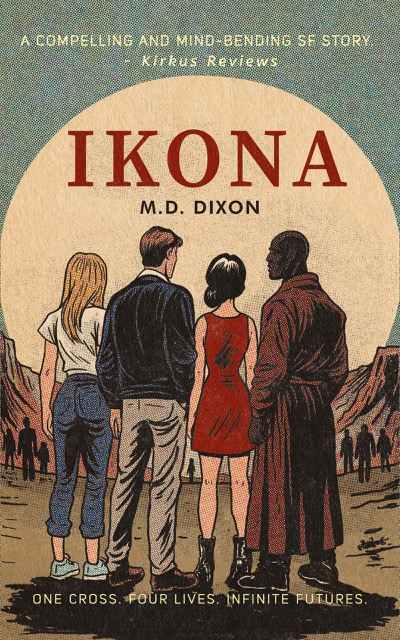
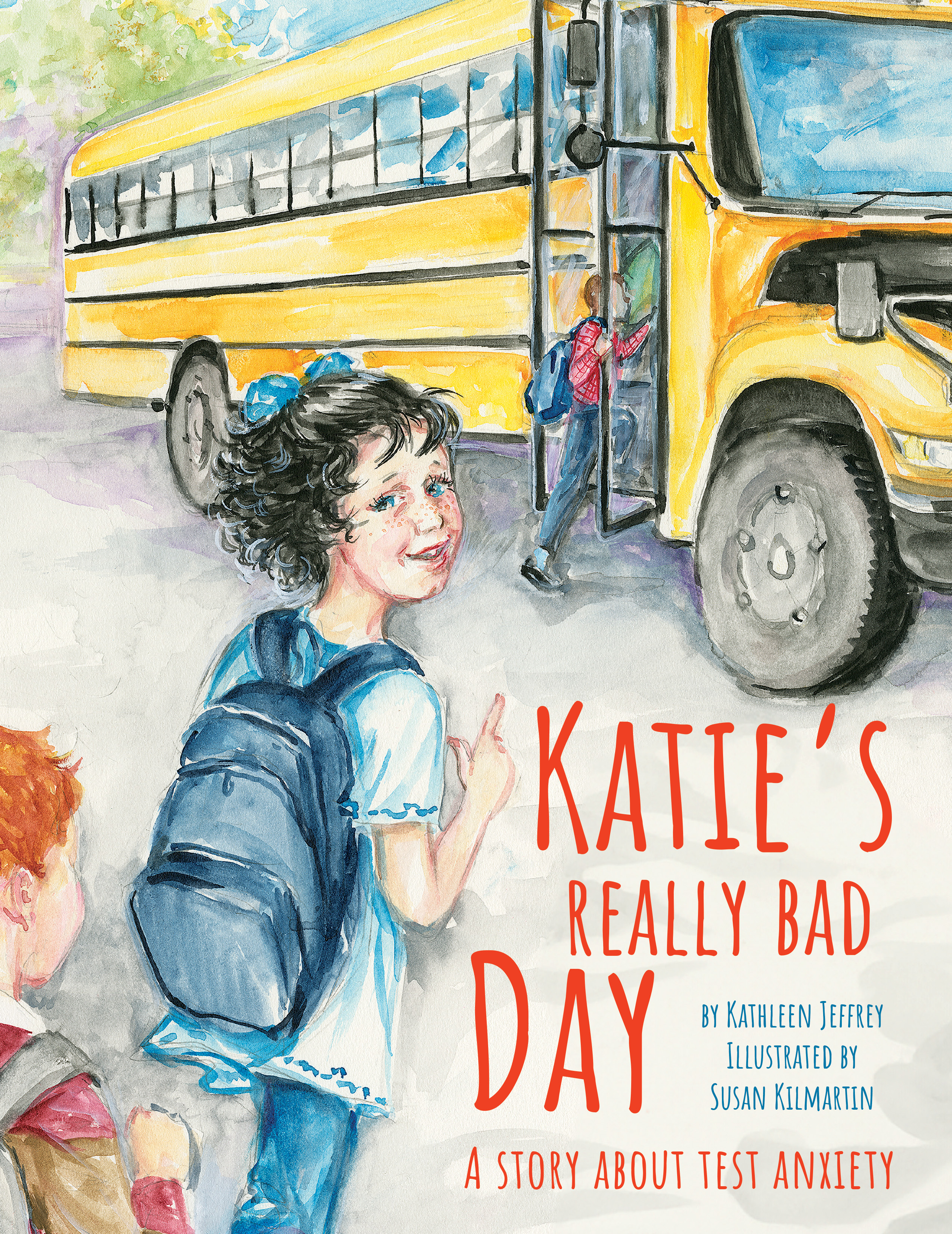

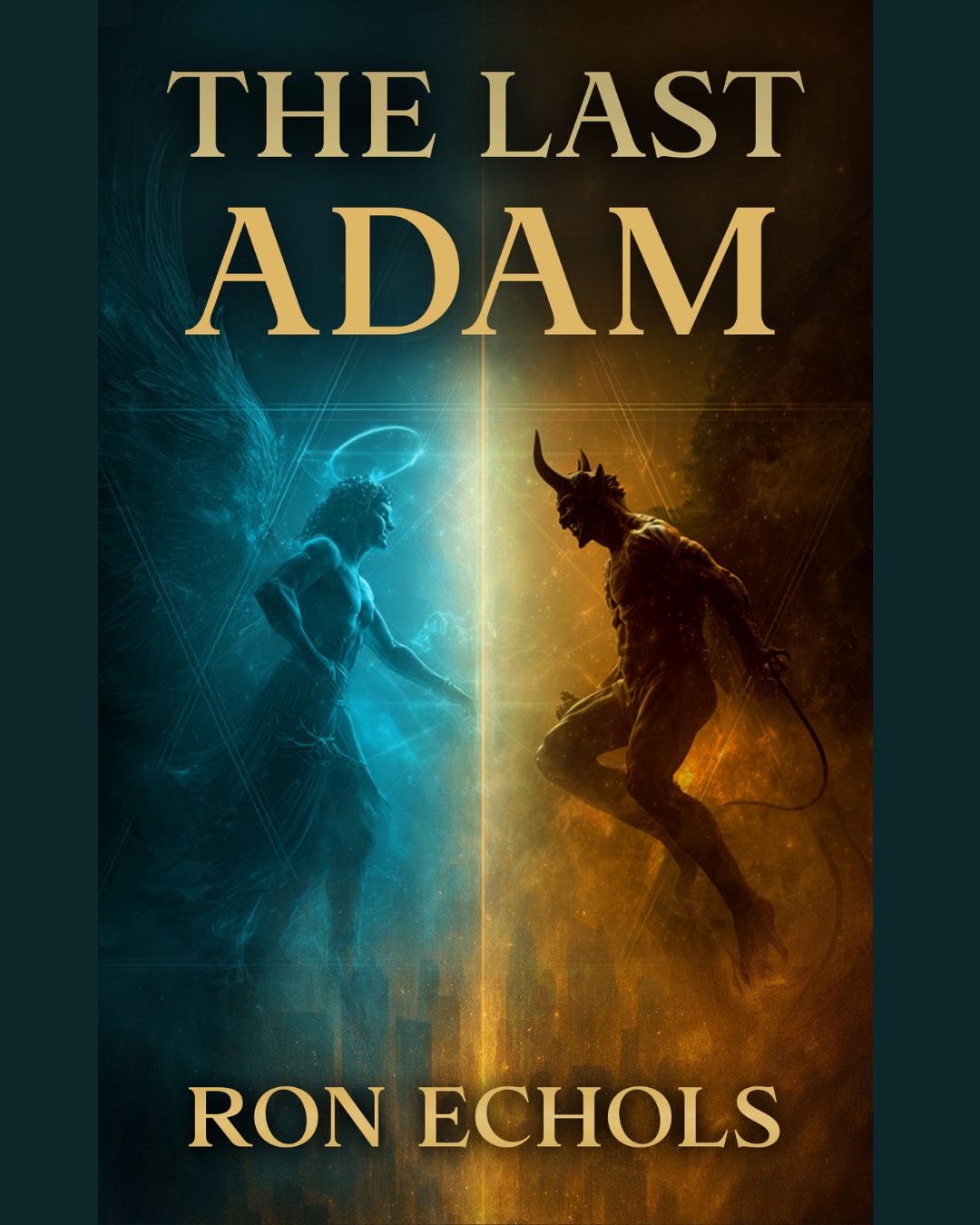







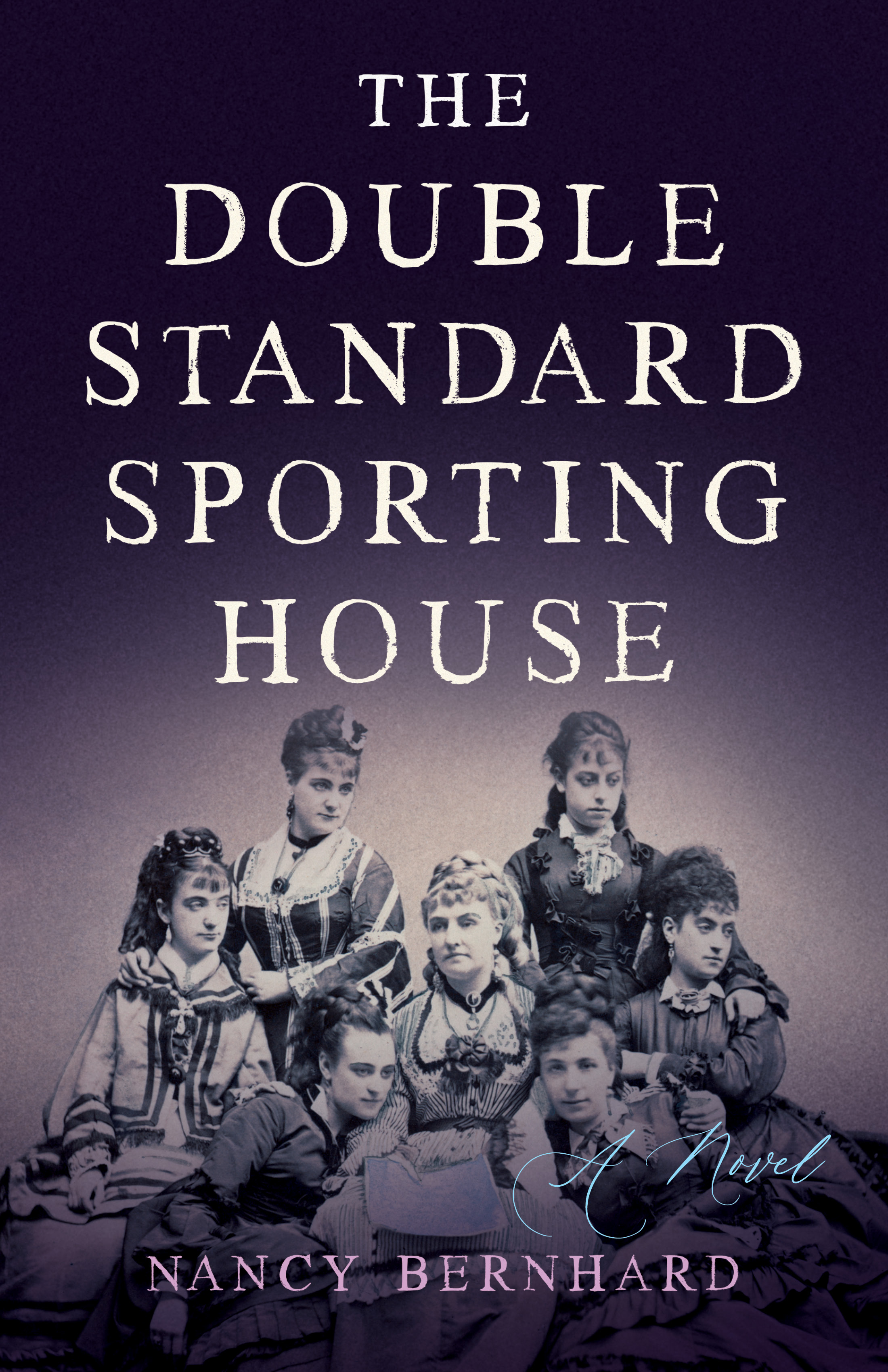

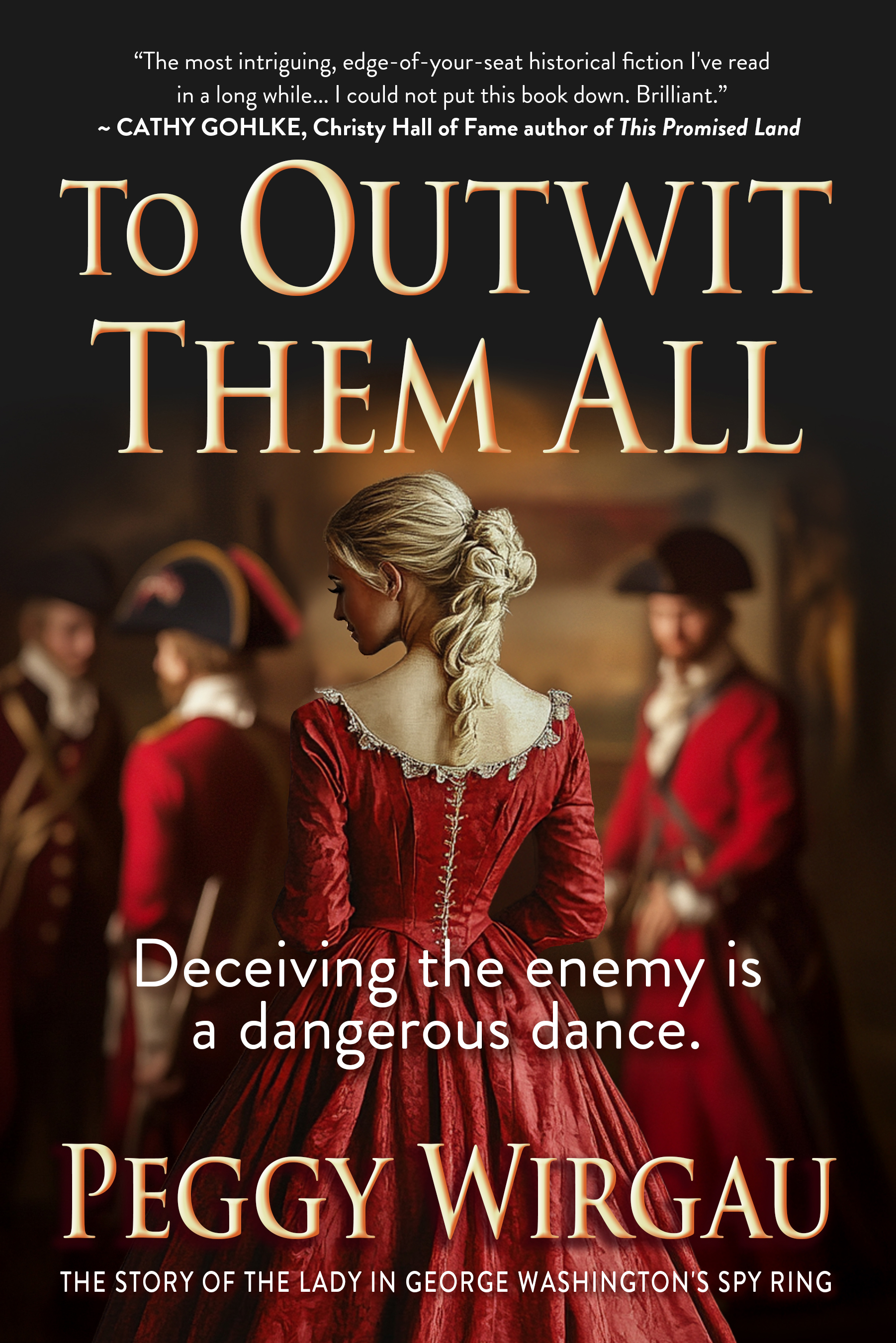



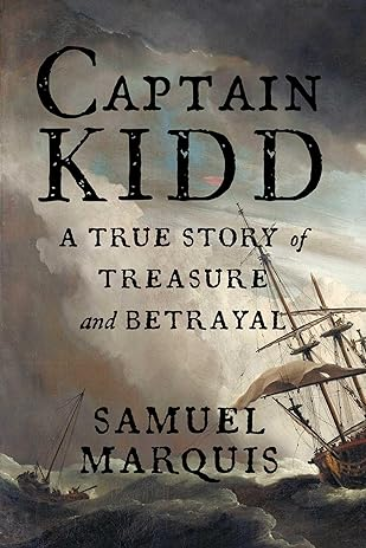

















 Lit World Interviews